With more than 1.4 billion consumers, including over 900 million online shoppers, China represents tens of billions of dollars in transactions every year.
Selling in China is not something you can improvise. This market, although promising, is highly regulated and relies on unique Chinese platforms, specific consumption habits and a rapidly evolving digital ecosystem.
In this article, we guide you step by step through how to sell in China, choose the right distribution channels, optimize your digital strategy and navigate local regulations to maximize your success.
1. Understanding the Chinese Market: A Fast-Growing Environment
1.1 China, an Essential Market for International Brands
China will soon account for nearly 50% of global luxury sales, spectacular growth that also extends to other sectors such as food, fashion, technology and cosmetics. Thanks to rapid growth in purchasing power and the expansion of the middle class, demand for foreign products keeps growing.
International trade in China is supported by several factors:
- Advanced digitalization: 1.281 billion mobile internet users in September 2026 (QuestMobile).
- Stable annual growth: E-commerce in China is growing by more than 15% a year, with 2024 revenue of 46,410 billion yuan
- A demanding target audience: Chinese consumers value quality, customer reviews and the authenticity of foreign brands.
1.2 The Challenges of the Chinese Market
Although selling in China is a massive opportunity, the following challenges must also be taken into account:
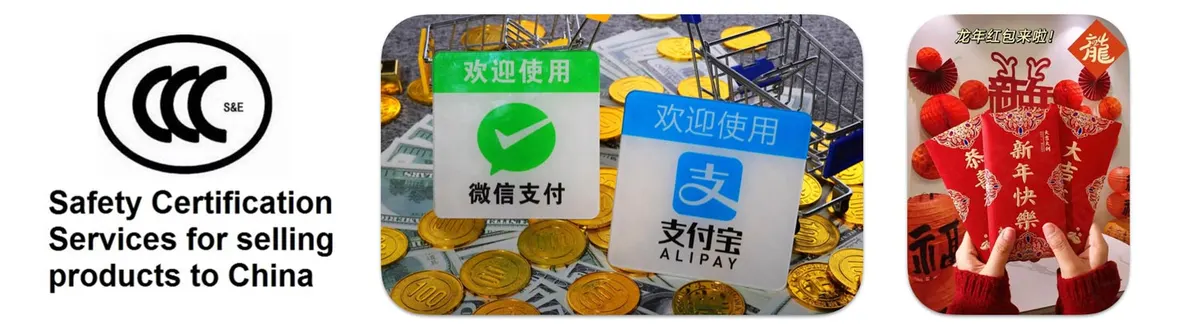
- Strict regulation: The import of goods into China is governed by rigorous standards. Whether you specialize in luxury goods, agricultural products or sensitive products, find out about the applicable standards, which change regularly.
- A unique payment system: The Chinese currency (yuan) and the mobile payment solutions WeChat Pay and Alipay are essential.
- Local culture and digitalization: Adapting your marketing message and storytelling to Chinese codes is essential.
2. Choosing the Best Strategy to Enter the Chinese Market
2.1 Cross-Border E-commerce: A Flexible, Accessible Solution
Cross-border e-commerce (CBEC) has become one of the most effective ways for foreign brands to sell in China without creating a local entity. This model makes it possible to sell directly to Chinese consumers within a more flexible regulatory framework.
Why Choose Cross-Border E-commerce?
CBEC offers several key advantages for an international brand:
-> Direct access to the Chinese market without having to set up a local company.
-> Fewer customs barriers thanks to more flexible regulations.
-> Advantageous taxes: 9.1% (for orders under CNY 5,000, about €650)
-> A way to test the market with a reduced investment, ideal for analyzing demand before a full-scale launch.
-> The ability to accept the Chinese currency and payments through Alipay and WeChat Pay.
The Main Chinese Platforms for Cross-Border E-commerce
In China, several commerce platforms let foreign companies sell their products through CBEC:
-> Xiaohongshu (RED Note Store): A mix of social network and e-commerce, ideal for selling products through influence and digital word of mouth. This is the channel we recommend first at DFC Studio, because it offers the best return on investment.
-> Tmall Global: The reference platform for luxury goods, cosmetics and fashion. Ideal for major brands seeking a premium position. Note that the entry cost is relatively high (over €200k in the first year).
-> WeChat: More than a simple messaging app, WeChat is a true ecosystem that lets brands sell directly through "Mini-Programs" (apps built into the WeChat ecosystem). An essential channel for building loyalty among Chinese customers.
The Challenges of Cross-Border E-commerce
Despite its advantages, CBEC involves certain challenges:
⚠ Strong competition, which requires a well-defined marketing strategy.
⚠ Longer delivery times than local warehousing in China, which can affect the experience and satisfaction of Chinese customers.
⚠ The requirement for a Chinese guarantor: the government requires foreign companies to have a legal representative in China, responsible in the event of a dispute or compliance issue.
-> If this applies to you, feel free to contact us! We can help.
2.2 Working With a Chinese Distributor: Accelerating Your Expansion
Another option is to work with a Chinese distributor, who will buy your products wholesale and resell them in China through its own distribution channels, after signing a distribution contract whose terms must be clearly defined.
Why Choose a Chinese Distributor?
-> Immediate access to the Chinese market.
-> Wider distribution, as distributors often have local partners and established points of sale.
-> No need to manage Chinese customs, as the distributor handles the import formalities.
The Limits of the Distributor Model
⚠ Loss of control over your brand image: You depend on the distributor to showcase your product.
⚠ Lower margins.
⚠ The need to find a reliable distributor, which can be difficult without a local presence or a strong brand image.
-> In this scenario, we strongly recommend keeping control of your brand. The distributor is there to make money, not to develop your brand. Keeping control also means you will not have to start from scratch in the event of a dispute. Many foreign companies have learned this the hard way.
2.3 Opening a Local Subsidiary in China: A Long-Term Strategy
If you want total control over your business in China, we recommend setting up a local company.
The Benefits of a Local Presence
-> Complete control of the brand and operations.
-> The ability to sell on all Chinese platforms, including the major local marketplaces.
-> Direct contact with consumers, which strengthens customer relations and loyalty.
The Steps to Open a Company in China
1️⃣ Register the company with the Chinese authorities.
2️⃣ Obtain the necessary licenses, including your business license and official seals.
3️⃣ Open a bank account in Chinese currency (CNY).
4️⃣ Set up a local team to manage sales, communication and customer service.*
*Working with a third party will let you monitor the performance of your local team.
The Challenges of a Local Presence
⚠ A long, complex administrative process, which often requires legal support.
2.4 Selecting the Best Entry Model for Your Business
|
Model |
Advantages |
Disadvantages |
Ideal for |
|---|---|---|---|
|
Cross-border e-commerce |
Quick to set up, less regulation, flexible |
Lower margins, longer delivery times |
Brands testing the market, niche products |
|
Chinese distributor |
Immediate access, simplified management |
Less control, dependence on the distributor |
Brands with strong local demand, retail |
|
Local subsidiary |
Total control, access to all domestic Chinese platforms |
Administrative complexity |
Established brands seeking long-term growth |
Each model has its own advantages and limits. The choice will depend on your budget, your sector and your long-term strategy.
3. Building a Winning Digital Strategy to Sell in China

China has one of the most advanced digital ecosystems in the world, completely independent of Western platforms. Google, Facebook, Instagram and Amazon are replaced by specific Chinese platforms, which are essential for capturing the attention of Chinese customers and maximizing sales.
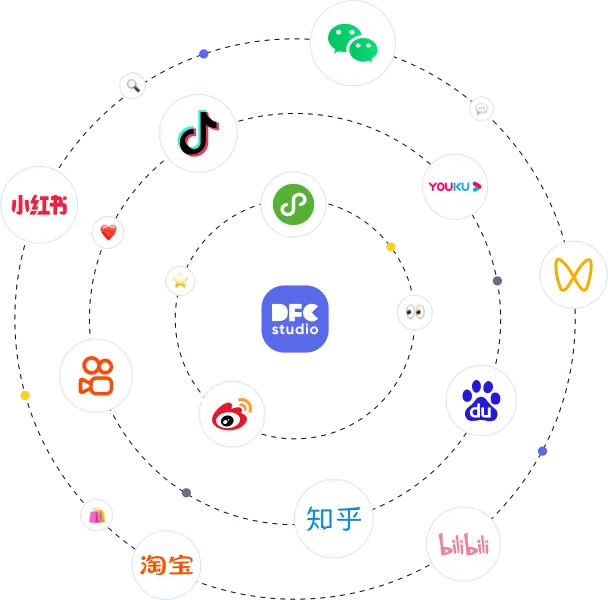
Digital marketing in China relies on a combination of social media, e-commerce and influencer marketing, each with a key role in the consumer's buying journey. To sell successfully in China, you must adapt your approach to local specificities.
3.1 The Importance of Social and Commerce Platforms in China
Social media are an integral part of daily life in China. Unlike Western markets, where consumers search on Google or Amazon, active Chinese users rely on a unique digital ecosystem in which social networks and commerce platforms are fully integrated.
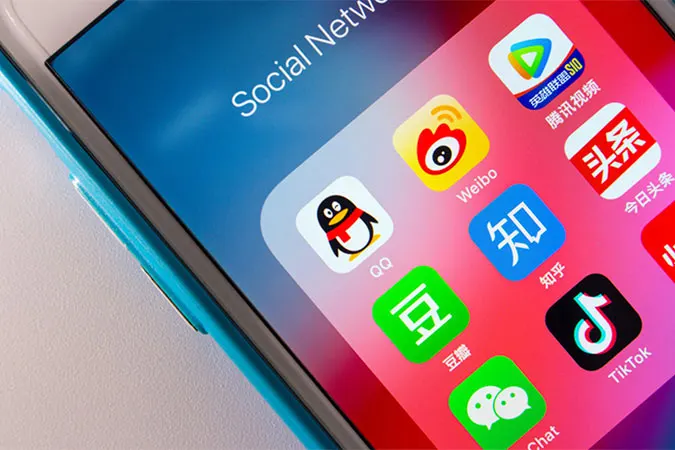
The main Chinese platforms to use to sell in China are:
1️⃣ WeChat : The Essential Super App
With 1.44 billion monthly active users (June 2026), WeChat is much more than a messaging app: it is a social platform, a CRM tool, a communication channel and a marketplace.
Use for brands:
– Create a WeChat Official Account to share content and interact with customers.
– Develop an e-commerce Mini-Program to sell directly on WeChat.
– Manage customer service through instant messaging.
– Run targeted advertising through WeChat Ads, with advanced audience segmentation.
2️⃣ Xiaohongshu (RED Note): The Essential Social Network for Luxury and Lifestyle
With 387 million monthly active users at the end of 2025, Xiaohongshu is a key platform for influencer marketing and social e-commerce, particularly for luxury goods, fashion, beauty and well-being.
Use for brands:
– Create a RED Note store to sell directly on the platform.
– Run KOL (Key Opinion Leader) and KOC (Key Opinion Consumer) campaigns to build credibility.
– Run pay-per-click campaigns to promote your brand and products.
– Highlight customer reviews and recommendations to build trust.
– Optimize in-app SEO, as young consumers use Xiaohongshu as a search engine.
3️⃣ Douyin (Chinese TikTok): The Engine Behind the Rapid Growth of Live Shopping
Douyin has more than 1 billion monthly active users (March 2026) and has become a key channel for advertising campaigns and live commerce.
Use for brands:
-> Create immersive videos to capture the attention of Chinese customers.
-> Integrate direct e-commerce links to online stores.
-> Collaborate with influencers and KOLs to maximize reach.
-> Take part in Douyin commercial events to boost sales.
4️⃣ Tmall & JD.com: The E-commerce Giants
Tmall and JD.com are the leaders of online retail in China, representing tens of billions of dollars in transactions every year.
📌 Use for brands:
-> Open an official store on Tmall or JD.com.
-> Set up promotional campaigns during the major shopping festivals.
-> Manage customer reviews and recommendations to build credibility.
-> Optimize in-platform SEO to appear in search results.
3.2 Advertising and Influencer Marketing: Capturing the Attention of Chinese Customers
Digital advertising in China is a key way to attract qualified prospects. However, traditional methods are not enough: Chinese consumers trust recommendations from other users and influencers more than conventional ads, although the latter remain essential for staying visible.
3.2.1. Paid Advertising (PPC) on Chinese Platforms
Investing in advertising is essential to gain visibility. Here are the main advertising channels:
-> WeChat Ads: Native advertising built into articles and Mini-Programs.
-> Douyin Ads: Video-format advertising, ideal for product launches.
-> Xiaohongshu Ads: Advertising built into product recommendations.
3.2.2. Influencer Marketing in China (KOLs and KOCs)
Key Opinion Leaders (KOLs) and Key Opinion Consumers (KOCs) are essential for building trust and generating sales. More than 70% of Chinese consumers say they are influenced by influencer recommendations before buying a product.

-> KOLs: Professional influencers with millions of followers on WeChat, Douyin and Xiaohongshu.
-> KOCs: Ordinary consumers whose opinions are seen as more authentic and credible.
Why include KOLs and KOCs in your strategy?
-> They humanize the brand and make products more accessible.
-> They generate strong engagement, with higher conversion rates than traditional advertising.
-> They improve search ranking, as their content is well indexed on Chinese platforms.
3.3 Building an Omnichannel Strategy: Integrating Digital and Physical
Distribution channels in China are very diverse. To maximize sales, we recommend combining several strategies:
Online-to-Offline (O2O) model:
-> Let consumers discover the brand online before buying in store.
-> Use a WeChat mini-program to link physical and digital experiences.
Partnerships with local retailers:
-> Work with local partners for better coverage of Chinese territory.
-> Take part in commercial events to raise awareness.
A Suitable Digital Strategy Is Essential to Succeed in China
Selling successfully in China requires a tailored digital approach and a thorough command of Chinese platforms. By combining digital advertising, influencer marketing, SEO and omnichannel strategies, brands can maximize their impact and achieve rapid growth in this ultra-competitive market.
4. Logistics and Regulations: What You Need to Know to Sell in China
Logistics and regulations are key factors to master to sell successfully in China. China has a strict regulatory framework, particularly for the import of goods, Chinese customs management and compliance with local standards.
To ensure smooth, efficient expansion, brands must choose the right logistics solutions, understand customs requirements and adapt to the specificities of the Chinese market.
4.1 Understanding the Rules for Importing Goods Into China
The import of goods into China is governed by the Chinese government, which imposes strict standards to protect its domestic market. Each product entering China must be registered, certified and subject to specific taxes.
Key points to check before importing into China:
-> Check whether your product is authorized for import (some products are restricted or prohibited).
-> Obtain the necessary certifications (CFDA for cosmetics, CIQ for food products).
-> Follow the Chinese labeling rules imposed by Chinese customs.
-> Declare the import to the General Administration of Customs (GACC).
Each product category has specific requirements. For example:
- Food products must comply with Chinese food safety standards and require prior approval.
- Luxury goods must be accompanied by detailed customs documents, in particular to prevent counterfeiting.
4.2 Managing Logistics: Solutions for Optimizing Delivery
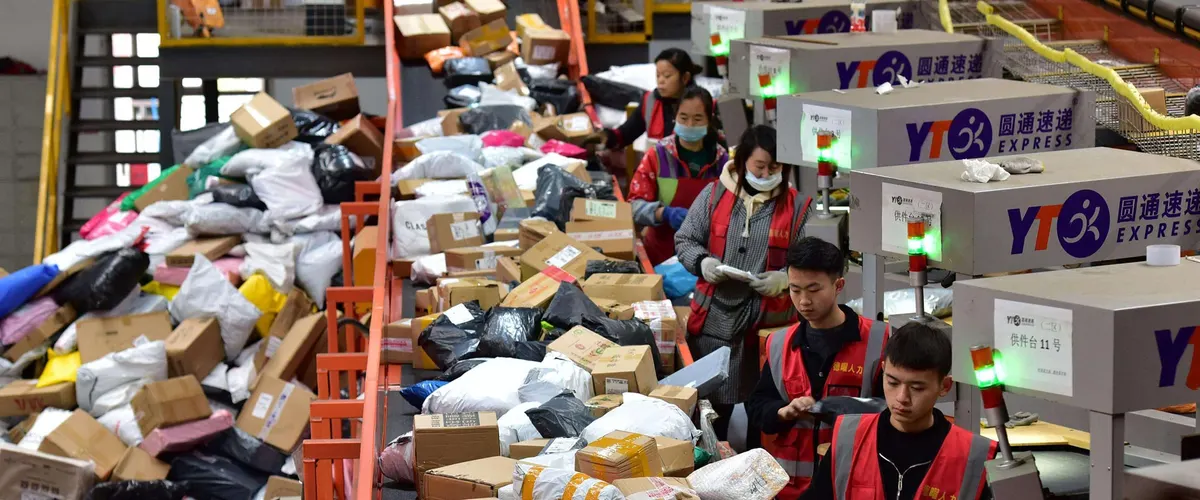
Efficient logistics are essential to meet the expectations of Chinese customers, who value fast, reliable delivery.
There are three main logistics models for selling in China:
1️⃣ Local Warehousing: The Fastest Solution
Brands with a presence in China can opt for local warehousing, which allows delivery in 24 to 48 hours.
Advantages:
✔ Ultra-fast delivery that meets the expectations of Chinese consumers.
✔ Lower shipping costs, avoiding import taxes on each order.
✔ Better management of returns and after-sales service.
Disadvantages:
⚠ Requires a company registered in China and local management.
⚠ High initial cost for warehousing and distribution.
2️⃣ Cross-Border E-commerce: Flexibility and Fewer Customs Constraints
Cross-border e-commerce (CBEC) lets foreign brands ship their products directly from abroad or through bonded warehouses (in China or Hong Kong, for example).
Advantages:
✔ Lets you sell in China without creating a local entity.
✔ Fewer regulatory restrictions than conventional import.
✔ Compatible with Chinese platforms such as Tmall Global, JD Worldwide and Xiaohongshu.
Disadvantages:
⚠ Longer delivery times (2 to 5 days for bonded warehouses, 5 to 10 days for shipping from Europe).
⚠ Higher shipping costs than domestic delivery.
4.3 Ensuring Quality After-Sales Service
Customer service in China is a decisive factor in sales success. Chinese consumers attach great importance to customer reviews and the guarantees offered.
Best practices for managing customer service in China:
-> Offer customer support in Mandarin, available on WeChat and Xiaohongshu.
-> Offer simple returns and refunds to win buyers' trust.
-> Manage customer reviews on e-commerce platforms and social media, as they strongly influence purchasing decisions.
Tip: In China, good after-sales service can make the difference between a brand that fails and a brand that succeeds.
4.4 Adapting Your Logistics Strategy to Chinese Commercial Events
Logistics must be optimized around the major Chinese commercial events (e-commerce festivals in China), which generate huge order peaks.
Events to plan for:
📅 11.11 (Singles' Day): The world's biggest e-commerce event, invented by Alibaba.
📅 618 Festival: A major promotional period in June. This event was created by JD.com to compete with Tmall and its Double 11, and to drive sales before the summer.
📅 Douyin and Xiaohongshu (RED Note) sales events: Many one-off events that help boost sales on these platforms.
Tip: Preparing your stock in advance and strengthening your customer service during these periods helps maximize revenue and improve your brand image.
Efficient logistics management that complies with Chinese regulations is a key lever for selling successfully in China.
Key takeaways:
✔ Adapt your logistics model (domestic warehousing, cross-border).
✔ Master the rules on import and compliance with Chinese standards.
✔ Offer local payment methods to maximize conversions.
✔ Manage after-sales service effectively to improve customer satisfaction.
✔ Plan for sales peaks during major e-commerce events.
5. Adapting Your Offer and Positioning to Succeed in China
5.1 The Importance of Local Adaptation: Understanding What Chinese Consumers Expect
Selling in China is not just about translating your website or advertising campaigns. You must completely rethink your offer, brand image and marketing message to meet the expectations of Chinese customers and be able to beat local products.
The Chinese market is unique and constantly evolving, with growing demand for premium products, exclusive services and strong personalization.
What influences purchasing decisions in China:
-> Authenticity and trust: Chinese consumers favor brands with a solid reputation, active accounts and positive customer reviews.
-> Prestige and storytelling: The brand's history and high-end positioning play a key role, especially for luxury goods.
-> The digitalization of the shopping experience: Purchases go mainly through Chinese platforms such as Tmall, JD.com, Xiaohongshu and Douyin.
-> Social influence: Recommendations from KOLs (Key Opinion Leaders) and KOCs (Key Opinion Consumers) strongly influence how a brand is perceived.
-> Localization: Chinese consumers are very sensitive to brands that take the trouble to understand their culture. It is also essential to think about a Chinese version of your brand name.
Tip: A well-thought-out local branding strategy improves brand perception and maximizes sales.
5.2 Personalizing Your Offer to Meet the Specificities of the Chinese Market
Chinese consumers, as well as looking for quality products, are very sensitive to detail and to how well a product suits their culture.
Key elements to adapt to succeed in China:
-> Packaging: In China, packaging is as important as the product itself. It must be elegant and colorful and include cultural elements (symbols of prosperity, lucky colors such as red and gold).
-> Local formats and tastes: For food products, the tastes of Chinese consumers differ from those of Westerners. For example, Starbucks adapts its drinks in China with popular ingredients such as matcha tea and taro.
-> Limited and exclusive editions: Chinese consumers love limited collections, which reinforce the feeling of exclusivity and urgency to buy.
-> Premium services: For luxury goods, offering exclusive services such as personalized engraving, VIP delivery or high-end gift packaging improves the customer experience.
5.3 Understanding the Chinese Enthusiasm for Luxury and High-End Products
Luxury consumption in China is doing well, with growing demand for discreet, niche luxury products and premium experiences.
Why Is China the World's Leading Luxury Market?
-> A young, affluent population: Chinese millennials and Gen Z are the main buyers of luxury goods, seeking exclusivity and prestige.
-> Strong growth in online luxury sales: In China, more than 50% of luxury sales are made on digital platforms, notably Tmall Luxury Pavilion and JD Luxury.
-> The importance of experience and storytelling: A luxury brand must offer much more than a product; it must tell a captivating story and associate itself with strong cultural values.
5.4 Working With Local Partners to Accelerate Your Expansion
Having local partners in China is a major competitive advantage.
Why Work With Partners Who Are Experts on the Chinese Market?
-> It makes it easier to access local distribution channels.
-> It helps you better understand the market and the expectations of Chinese customers.
-> It makes it easier to navigate Chinese regulations and customs.
To succeed in China, it is essential to adapt your offer, branding and marketing strategy to the expectations of Chinese consumers.
Key takeaways:
✔ Adapt your product (packaging, formats, exclusivity).
✔ Work on your brand image and storytelling to captivate the Chinese audience.
✔ Use Chinese commercial events to maximize sales.
✔ Surround yourself with local partners and market experts to avoid strategic mistakes.
Conclusion: Selling Successfully in China Requires a Tailored Strategy
China is a real opportunity for international brands, with a fast-growing market and advanced digitalization that is transforming consumption habits. However, selling successfully in China takes much more than simply adapting your offer: you must understand the specificities of the market, master local digital channels and skillfully navigate the regulations and expectations of Chinese consumers.
The keys to success in China:
-> Choose the right entry strategy (cross-border, distributor or local presence) to maximize accessibility.
-> Use Chinese platforms such as WeChat, Xiaohongshu and Douyin to capture customers' attention and stimulate sales.
-> Optimize your logistics and regulatory compliance by anticipating customs formalities and local requirements.
-> Create a localized shopping experience by adapting your packaging, marketing message and product offer to the expectations of Chinese consumers.
-> Take advantage of major e-commerce events (11.11, 618 Festival, Chinese New Year) to generate sales peaks.
-> Rely on commercial partners who are market experts to strengthen your distribution network and support your annual growth.
Success in China comes through a well-defined strategic approach and the ability to innovate continuously to meet consumers' new expectations.
At DFC Studio, we support brands in their digital and e-commerce development to maximize their growth on the Chinese market. Contact us today to discuss the potential and feasibility of your project!
OUR EXPERTISEMarket entry and localisation in China
Thibault has been living in Beijing since 2014 and has quickly established himself as one of the leading international digital experts in China. With his extensive expertise, he assists large corporations, institutions, and high-end brands in their digital development by offering strategic solutions tailored to the Chinese market.