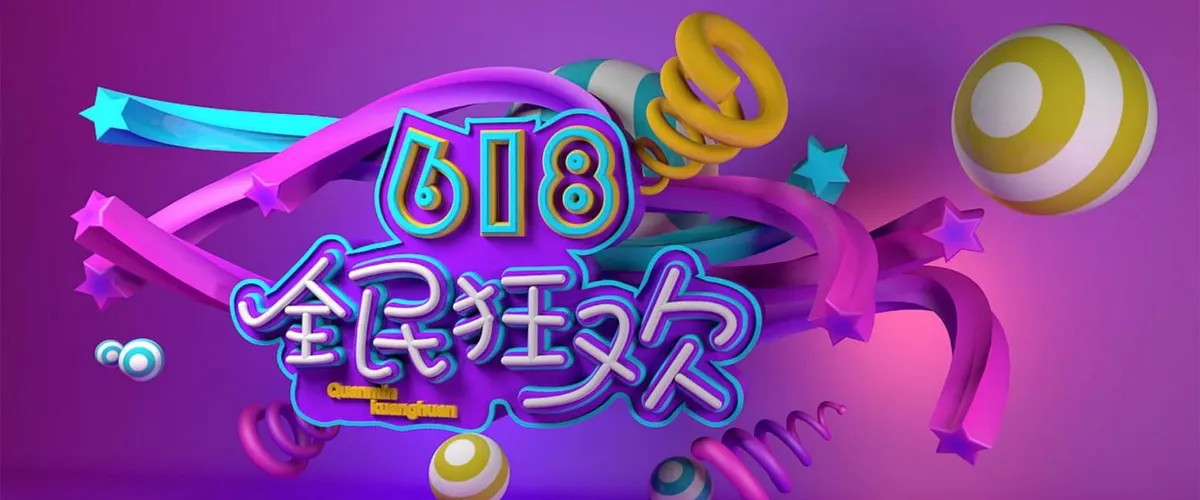
For international brands that want to break into this ultra-competitive market, it is crucial to understand and integrate the many e-commerce festivals that punctuate the year, shaped by a rich cultural calendar.
These events, largely popularized by giants such as Alibaba and JD.com, are not simply sales periods. They are part of a consumer culture in which a sense of urgency (FOMO) and innovative marketing strategies play a key role. From the legendary Double 11 (November 11) to the Chinese New Year festivities and Chinese Valentine's Day (520 and Qixi), each festival targets a specific audience and is an excellent opportunity to boost sales and raise brand awareness among millions of consumers.
In this article, we guide you through the main shopping festivals, their impact on the market and the best strategies for making the most of them.
1. January-February: The First Festivals of the Year
The e-commerce year in China starts strong with festivals that coincide with key moments in consumers' lives: preparing for Chinese New Year and celebrating Valentine's Day. These events bring a significant rise in spending, particularly on gifts and products linked to festive traditions.
Ban Nian Huo Festival (办年货): Pre-Chinese New Year Shopping
🗓 Period: Two weeks before Chinese New Year (the date changes each year according to the lunar calendar)
🎯 Target: Chinese families, young generations (post-95 and post-00)
📦 Top products: Home appliances, food, gifts
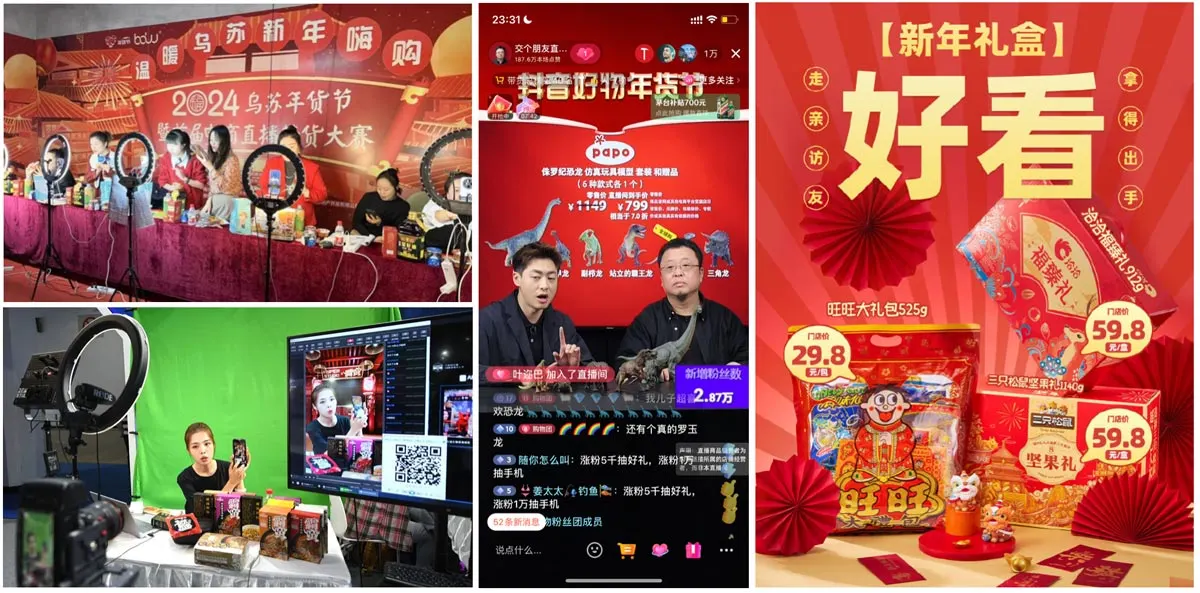
The Ban Nian Huo Festival is a Chinese tradition marking the period of preparation for Chinese New Year, the most important event in the Chinese calendar. During this time, Chinese consumers rush to e-commerce platforms such as Tmall and JD.com to buy everything they need before delivery services close for the official holidays.
Best sellers include home appliances, food and gift boxes. In 2022, demand for IP (intellectual property) gift boxes from major brands exploded, growing by 450% in one year. A key insight for foreign brands that want to win over young Chinese generations!
Valentine's Day (February 14): A Key Opportunity for Fashion and Beauty
🗓 Period: February 14
🎯 Target: Couples, singles, young consumers
📦 Top products: Fashion, cosmetics, jewelry, perfume
Although Western in origin, Valentine's Day is now a major commercial holiday in China, with a unique approach: it is not limited to couples! Many singles also buy gifts for themselves, a trend that particularly benefits luxury, beauty and accessories brands.
E-commerce platforms launch large-scale campaigns with promotions on perfume, jewelry and beauty products. Some brands also focus on limited editions and exclusive collaborations to attract consumers' attention.
Did you know? In China, Valentine's Day is not the only holiday for lovers: 520 (May 20) and the Qixi Festival (August) are also key moments in the e-commerce calendar.
2. March: Focus on Female Consumers
With the arrival of spring, one of the first highlights of Chinese e-commerce is dedicated to women. These events offer a unique opportunity for brands, especially in fashion, beauty and luxury.
Girls' Day and Women's Day (March 7-8): The Rise of Female Purchasing Power
🗓 Period: March 7 and 8
🎯 Target: Young women, urban female consumers, millennials
📦 Top products: Fashion, cosmetics, accessories, well-being and trending products.
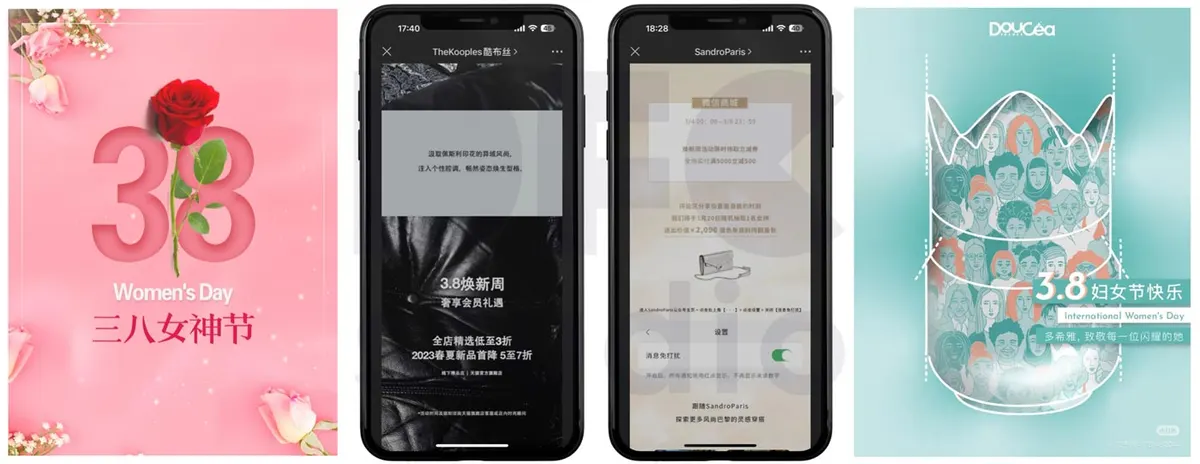
March 8, known worldwide as International Women's Day, has long been associated in China with married women and older generations. To include young female consumers, Chinese female students created an alternative: Girls' Day, celebrated on March 7.
The phenomenon was quickly taken up by e-commerce platforms, which launched large-scale campaigns.
Why does it matter?
• It is the first major e-commerce event after Chinese New Year.
• Young Chinese women have strong purchasing power and are big consumers of fashion and beauty products.
• Platforms highlight feminist, inspiring campaigns that play on empowerment and self-assertion.
Opportunity for foreign brands:
• Launch limited editions or gift boxes.
• Collaborate with female influencers (KOLs) on Weibo, Xiaohongshu and Douyin.
• Focus on marketing campaigns centered on female empowerment and inclusivity.
3. May-June: A Festival for Lovers and an E-commerce Giant
After a slight lull in April, consumption picks up again with two major events: Chinese Valentine's Day on May 20 (520) and JD.com's huge 618 Festival in June.
520: Chinese Valentine's Day (May 20)
🗓 Period: May 20
🎯 Target: Couples, young consumers
📦 Top products: Jewelry, fashion, cosmetics, luxury
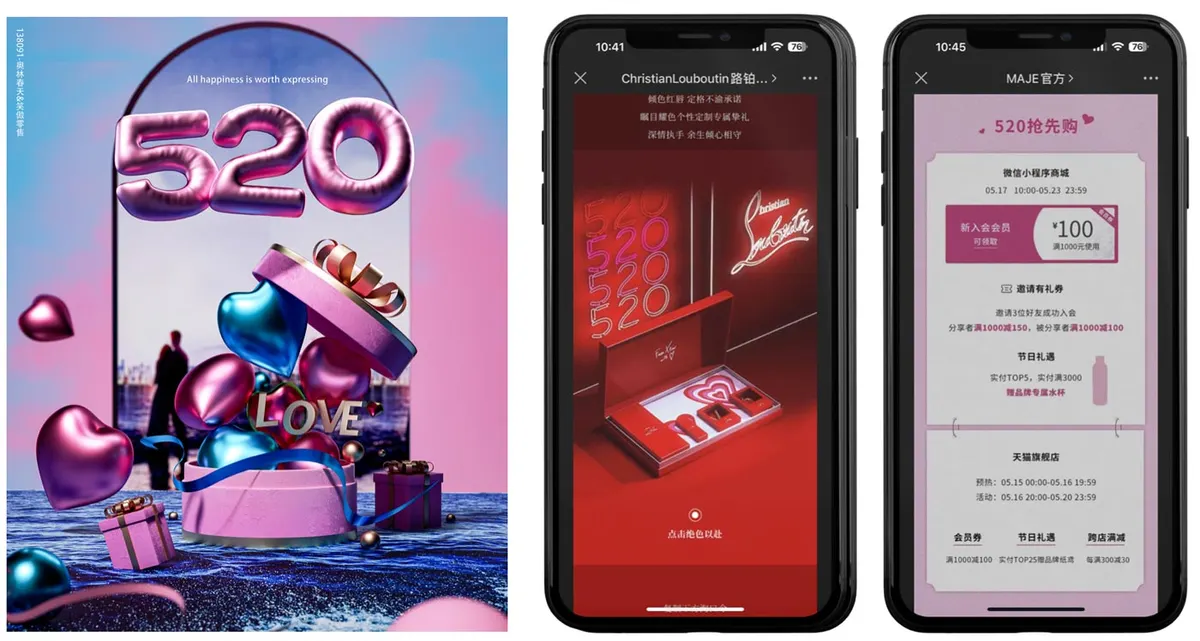
Why is May 20 a key date in Chinese e-commerce? Simply because 520 (wǔ èr líng) sounds like "I love you" (我爱你, wǒ ài nǐ) in Chinese. As a result, this date has become a second Valentine's Day, with an explosion in online sales.
Opportunity for foreign brands:
• Focus on special collections or "I love you" gift boxes.
• Create storytelling campaigns centered on love and connection.
• Offer personalization services (engraving, premium gift wrapping, etc.).
Children's Day (June 1): A Trigger for 618
🗓 Period: June 1
🎯 Target: Parents, families, children
📦 Top products: Toys, children's clothing, educational products
June 1, International Children's Day, is a key date in China, widely used by brands selling toys, clothing, books and educational products.
Opportunity for foreign brands:
• Focus on educational and high-tech toys, very popular with young Chinese parents.
• Create parent-child bundles to encourage group purchases.
• Launch 618 promotions from June 1, with pre-orders and exclusive offers for early birds.
618 Festival: The Great Rival of Double 11 (June 18)
🗓 Period: June 18
🎯 Target: All consumers, with a focus on tech and big-ticket purchases
📦 Top products: Electronics, home appliances, high-tech, fashion
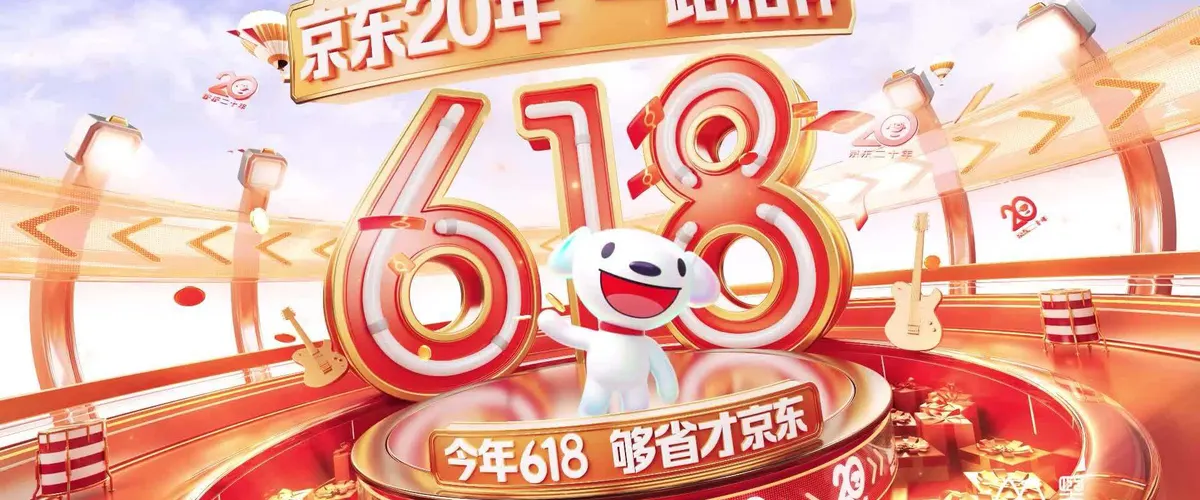
Created by JD.com in 1998 to celebrate its anniversary, the 618 Festival is now the second-biggest e-commerce event in China, after Double 11.
Some impressive figures:
In 2022, online sales during 618 reached 695.9 billion yuan. JD.com recorded 379.3 billion yuan in transactions, up 35.5 billion from 2021.
Opportunity for foreign brands:
• Offer bundles and tiered discounts.
• Take part in live-stream sales on JD Live.
• Highlight quality and innovation (JD.com is known for attracting demanding buyers).
4. Summer-Autumn: Niche Festivals and Specific Targeting
Summer and early autumn are marked by more targeted e-commerce events, giving brands an opportunity to engage specific audiences. Among them, the traditional Chinese Valentine's Day (Qixi Festival) and the 99 Wine Festival are particularly interesting for luxury, fashion and fine food brands.
Qixi Festival: Traditional Valentine's Day (late August, date varies)
🗓 Period: Around August 20
🎯 Target: Couples, lovers of tradition and luxury
📦 Top products: Jewelry, fashion, cosmetics, perfume, high-end accessories, luxury products
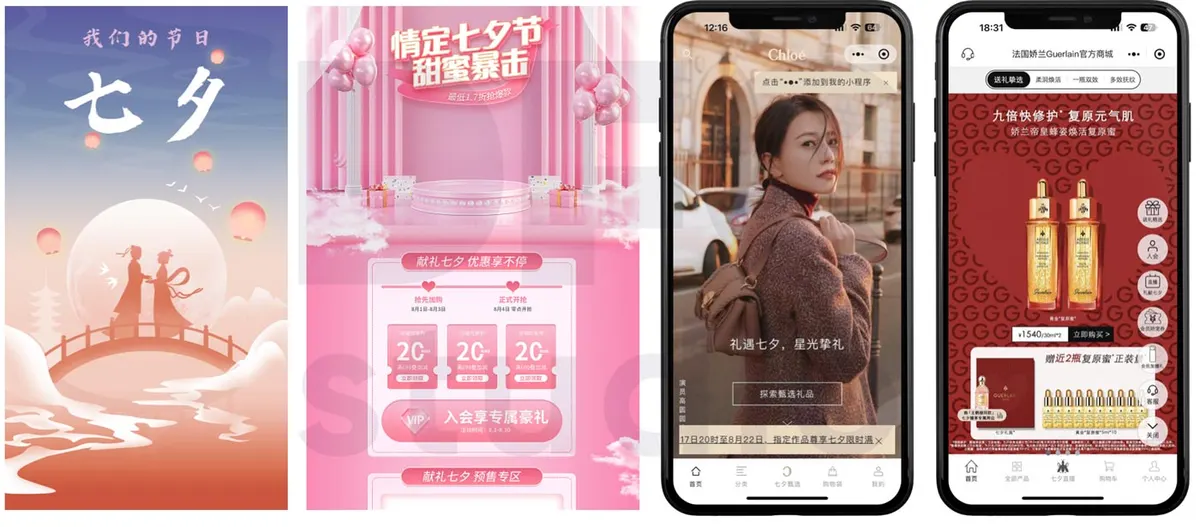
The Qixi Festival is also known as Chinese Valentine's Day, but unlike 520 (May 20), it is rooted in Chinese tradition and culture. It celebrates the romantic legend of the Cowherd and the Weaver Girl, two lovers separated by the Milky Way and reunited once a year.
Why is it a key e-commerce event?
• Unlike 520, which is more modern and mainstream, Qixi attracts a more upscale clientele.
• Many luxury brands use it to launch limited editions and romantic campaigns, online and in social commerce.
• Major jewelers and watchmakers (Cartier, Tiffany, Bulgari…) compete in ingenuity with exclusive campaigns on WeChat and Xiaohongshu.
Opportunity for foreign brands:
• Focus on storytelling and emotion with visuals inspired by Chinese folklore.
• Offer personalization services (engraving, romantic messages, premium packaging).
• Create live-streaming campaigns with well-known influencers to increase consumer confidence in your brand.
99 Wine Festival (September 9): The Rise of Wine in China
🗓 Period: September 9
🎯 Target: Wine lovers, affluent consumers, fine food enthusiasts
📦 Top products: Wines, spirits, gastronomy
The 99 Wine Festival was launched by Tmall and JD.com to promote wine consumption in China, a growing market. The number 99 refers to longevity and prosperity, important values in Chinese culture.
Opportunity for foreign brands:
• Focus on education with campaigns explaining the specific features of French, Italian, Spanish wines…
• Offer discovery packs or assortments to encourage people to explore your range.
• Work with wine-sector KOLs to give the offer credibility (e.g. sommeliers, lifestyle experts).
5. November-December: The Super Sale Season
The end of the year is THE key moment for Chinese e-commerce. Two events dominate this period: Double 11, the world's biggest e-commerce festival (which has broken many sales records), and Double 12, which extends the promotional fever for small and medium-sized brands. Both events meet the needs of the modern consumer.
Double 11: The King of E-commerce (November 11)
🗓 Period: November 11
🎯 Target: All consumers, from Gen Z to luxury buyers
📦 Top products: All categories, with a peak in tech, fashion and beauty
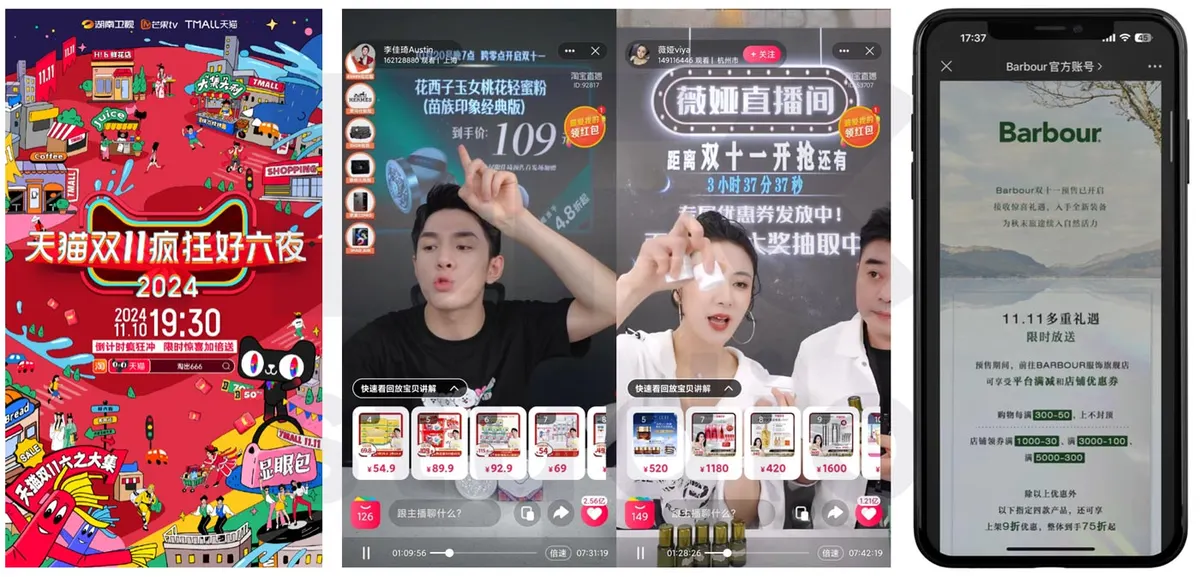
Also known as Singles' Day (光棍节, Guanggun Jie), Double 11 was launched in 2009 by Alibaba. What started as a simple promotion on Taobao has become the biggest e-commerce event in the world.
Some impressive figures:
In 2021, Tmall generated 540.3 billion yuan in one day.
Millions of products sell out in minutes thanks to presales and flash sales.
The Double 11 gala, a TV show broadcast the night before, brings together stars and has a massive influence on product sales.
Why is it a must?
• Double 11 is a window of opportunity for ALL sectors, from luxury and electronics to fashion and beauty.
• It is an ultra-competitive event, where discounts and combined offers (coupons, cashback, bundles) are essential to capture consumers' attention.
Opportunity for foreign brands:
• Take part in presales to capture buyers from October.
• Offer collaborations and limited editions to stand out.
• Work with live streamers who boost conversions in real time.
Double 12: The Second Chance (December 12)
🗓 Period: December 12
🎯 Target: Shoppers who missed Double 11, small and medium-sized brands
📦 Top products: Fashion, beauty, accessories, home decor, lifestyle
Launched by Alibaba, Double 12 is a response to the success of Double 11. It targets consumers who could not take advantage of the November promotions and small brands looking to clear their stock before the end of the year.
Why is it interesting?
• Less competition than Double 11, but still strong sales opportunities.
• Live commerce continues to play a key role in encouraging impulse purchases.
• Gifts and seasonal products are highlighted ahead of the year-end holidays.
Opportunity for foreign brands:
• Focus on packs and bundles.
• Play on exclusivity with special "last chance" collections.
• Optimize FOMO strategies (countdowns, limited quantities, benefits for first buyers).
Conclusion
Chinese e-commerce festivals are not simply sales periods: they set the rhythm of the year and shape the consumption habits of bargain-hunting Chinese shoppers. For foreign brands, understanding this commercial calendar set by the main platforms, as well as Chinese consumer behavior, is essential to succeed in this ultra-competitive market and achieve record sales.
The keys to success?
• Focus on local commerce platforms (Tmall, JD.com, Douyin, Xiaohongshu).
• Work with KOLs and live streamers to boost visibility.
• Adapt offers to the cultural specificities of each festival.
Want to build these shopping festivals into your social commerce strategy in China?
Contact DFC Studio for tailored support!

Thibault has been living in Beijing since 2014 and has quickly established himself as one of the leading international digital experts in China. With his extensive expertise, he assists large corporations, institutions, and high-end brands in their digital development by offering strategic solutions tailored to the Chinese market.