In China, a habit has quietly taken hold. Before buying, more and more consumers open an artificial intelligence app and ask their question. Not to replace a search engine or a friend's opinion, but to go faster, compare more clearly and feel reassured before deciding.
DeepSeek, Kimi, Ernie, Doubao, Qwen: these names are now part of everyday life in China. People ask them about a product, a brand or a recommendation, just as they once asked a salesperson or a forum. The gesture seems trivial. Yet it is profoundly transforming how a brand is discovered, understood and chosen.
For European brands that are present in China, or on their way there, this is not a threat. It is a new stage of the customer journey to understand, then integrate. Let's see which one.
A Shopping Reflex That Has Become Natural in China
First, let's measure how far generative AI has entered Chinese habits. While Europe is still cautiously discovering these tools, China has adopted them at remarkable speed.
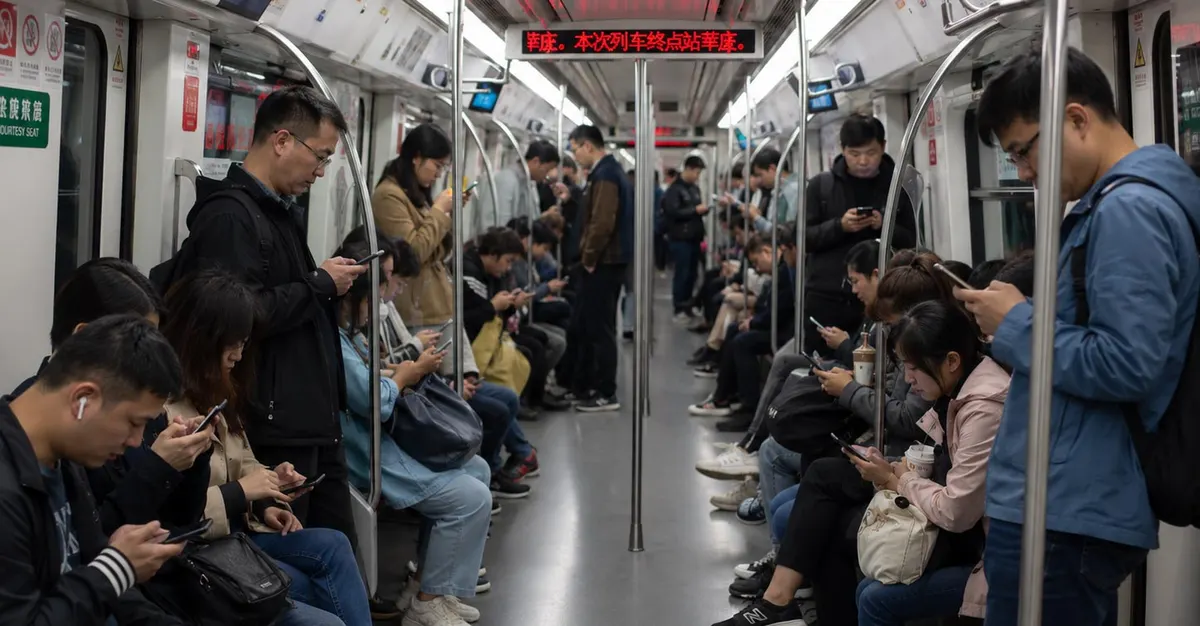
According to the Accenture Consumer Insights 2025 study, 86% of Chinese consumers use generative AI every week. This is no longer the preserve of the curious or tech enthusiasts. It is mass behavior, built into the normal rhythm of consumption.
This figure tells a story of evolution, not disruption. AI has not established itself against the other channels. It has slipped naturally between them, because it meets a simple need: getting a clear, concise answer without sorting through ten search results.
This normalization changes the game. When a tool becomes a reflex, it stops being an option and becomes a required stop. And a stop on the buying journey deserves a close look.
A Surprising Level of Trust in Artificial Intelligence
The second lesson from the data is more unexpected. In China, AI is not only used for searching. It inspires trust.
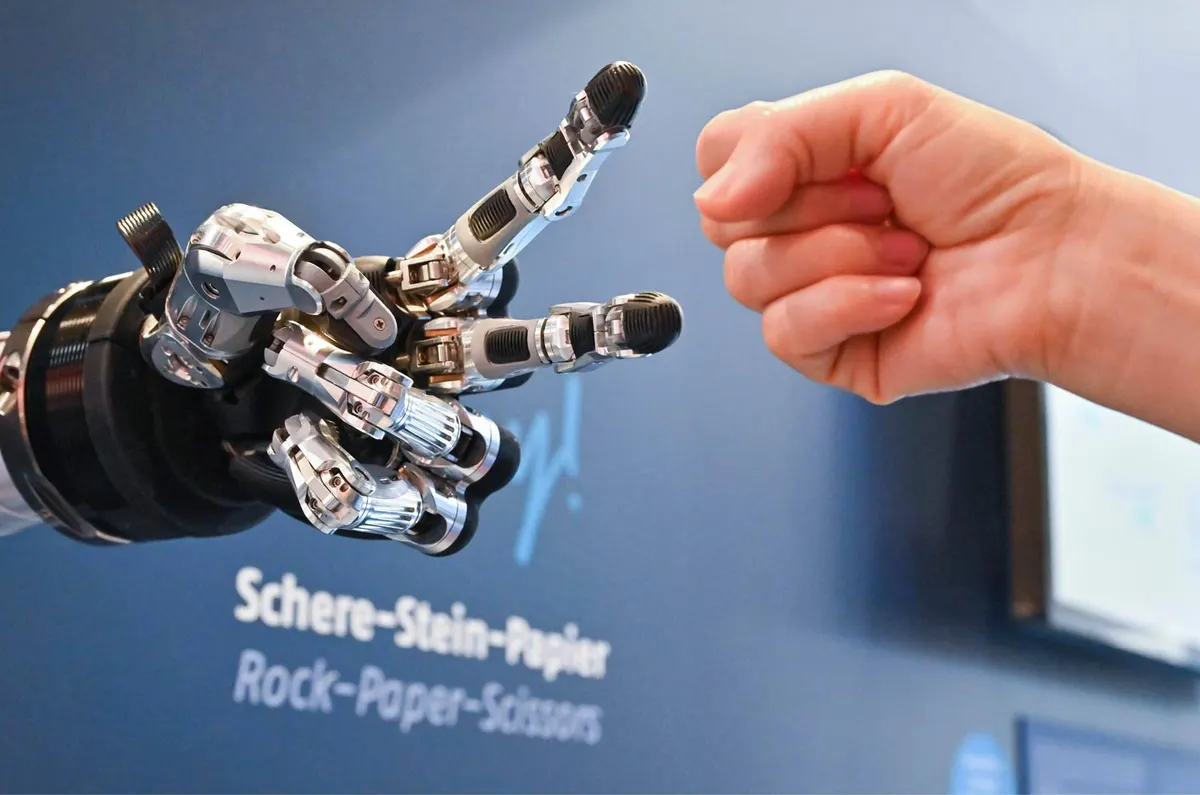
Also according to Accenture, 57% of Chinese consumers trust AI more than their friends and family to discover a new brand or product. This figure is worth pausing on. It does not say that Chinese people have stopped listening to those around them. It says that, specifically for product discovery, AI is perceived as a neutral, informed and exhaustive source.
This trust has a direct consequence. When an AI describes a brand, sums up its strengths or compares it with another, what it says is not received as advertising. It is received as advice. And advice carries far more weight than a promotional message in a purchase decision.
For a brand, the way AI talks about it is therefore not a technical detail. It is a voice speaking in its name, one it did not choose, and one its audience listens to closely.
From Discovery to Decision: AI Across the Whole Journey
The third figure closes the loop. Discovering and trusting is one thing. Buying is another. Yet the data shows that AI also accompanies this final step.
According to the 2025 white paper from the Zhihu Research Institute on AI-assisted purchasing decisions, 81% of Chinese consumers follow AI's recommendation, at least in part, to finalize their purchase. So the recommendation does not remain theoretical. It translates into action.
One last point completes the picture. Again according to Accenture, 55% of Chinese consumers actively compare several brands before buying, even when they already have a preferred one. An initial preference therefore offers no protection. Consumers check and compare, and AI is one of their main comparison tools.
Taken together, these data points outline a coherent journey. AI comes in at the discovery stage, builds trust, guides comparison and accompanies the decision. It is not one channel among others. It runs through the entire buying journey.
AI in China: A Cross-Cutting Building Block, Not a Channel
This is where the image of the building block makes sense. Marketing channels are often described as separate pipes: website, social media, retail, advertising. AI does not work like that.
It does not create a new pipe. It fits in as a cross-cutting layer that aggregates, summarizes and redistributes what already exists elsewhere. A Chinese AI does not talk about your brand out of nowhere. It relies on signals: your content, your pages, reviews published on RED Note (Xiaohongshu), conversations on WeChat, what your distributors say, media coverage.
AI digests these signals and turns them into a single, concise answer presented as the truth. That is precisely what makes it so strong and so singular. Where consumers once had to piece together an opinion from scattered sources, AI hands them a ready-made conclusion.
This building block has a feature the other channels do not have. On your website, you control every word. On your WeChat account, you publish what you want. On AI, you do not decide the answer. It is built from signals you do not always control, and sometimes do not even know about.
A Concrete Case: A Premium Brand Rated by Chinese AI
Let's make this tangible with a real, anonymized case: a French premium ready-to-wear brand, distributed in China with several of its own stores, well established and recognized.

A consumer asks the AI of a Chinese lifestyle platform about this brand. The answer highlights a few qualities, then adds a caveat: "if you are looking above all for a fitted cut and clothes designed to last many years, this may not be the best choice".
The nuance is subtle. Yet it is enough to sow doubt at the very moment the consumer is hesitating. Even more striking: the brand had no idea that AI was saying this about it. No one, in its teams or at its distributors, was monitoring this voice.
This case is not exceptional. It illustrates a new reality: a recommendation can form and circulate long before the consumer visits your website or walks into your store. The brand then enters the conversation without knowing what is being said.
What AI in China Changes for a European Brand
Should you worry? Not necessarily. But ignoring it would be unwise.
The point is not to fear AI or to react in a hurry. It is to become aware of it and calmly build it into your thinking about the Chinese market. A brand that knows AI has become a touchpoint can start asking the right questions:
→ Does it appear in the answers of Chinese AIs?
→ Is it described accurately?
→ Does the tone serve its positioning?
→ Is it cited more or less favorably than its competitors?
These questions do not call for panic. They call for attention. AI extends a logic brands already know. We have learned to look after our search ranking, run our social media and monitor our online reputation. Presence on Chinese AIs is a continuation of this: a new surface for brand expression, which deserves the same care as the previous ones.
Understand Before Optimizing Your Presence on Chinese AI
The good news is that there is no rush to fix everything. Above all, it pays to understand.
As with any new channel, the first step is not to act but to observe. You can only improve what you have first measured. Knowing what Chinese AIs actually say about your brand is already valuable information, which most competitors do not yet have.
The brands taking this subject seriously today are not doing so out of fear. They are doing so because they have understood that a consumption habit is taking shape right now, and that it is more comfortable to go along with it early than to catch up later.
AI is neither a danger nor a fad. It is one more building block in the journey that leads a Chinese consumer to your brand. A discreet building block, already in place, that your customers use every week. Knowing it means continuing to do your job as a brand well: being present, accurate and understood, wherever people talk about you.
DFC Studio supports European premium and luxury brands across their entire Chinese customer journey, from WeChat to RED Note (Xiaohongshu) and this new building block, AI.
Frequently Asked Questions
What are the main AIs used in China?
DeepSeek, Kimi, Ernie (Baidu), Doubao (ByteDance) and Qwen (Alibaba) are among the AI apps most used by Chinese consumers to discover and compare brands.
Why does AI matter in the Chinese buying journey?
According to Accenture Consumer Insights 2025, 86% of Chinese consumers use AI every week and 57% trust it more than their friends and family to discover a brand. AI comes into play from discovery to decision.
Can a brand control what Chinese AI says about it?
Not directly. The AI's answer is built from external signals (RED Note reviews, WeChat conversations, content, media). A brand can, however, measure what is said, then work on the signals that feed it: this is GEO (Generative Engine Optimization).

Thibault has been living in Beijing since 2014 and has quickly established himself as one of the leading international digital experts in China. With his extensive expertise, he assists large corporations, institutions, and high-end brands in their digital development by offering strategic solutions tailored to the Chinese market.