The country's digitalization, combined with the rise of new technologies, has radically transformed the habits of Chinese consumers. Young, ultra-connected consumers interact with brands every day on mobile devices, buy with mobile payments, and rely on product reviews before making a decision.
In this article, we explore the essential digital marketing strategies in China, highlighting the main trends and the challenges facing Chinese companies and Western companies that want to enter this market.
1. A Unique Digital Ecosystem: Understanding Competition Between Platforms
Unlike the West, where Google, Facebook and Instagram dominate, China relies on local platforms as essential means of communication and marketing:
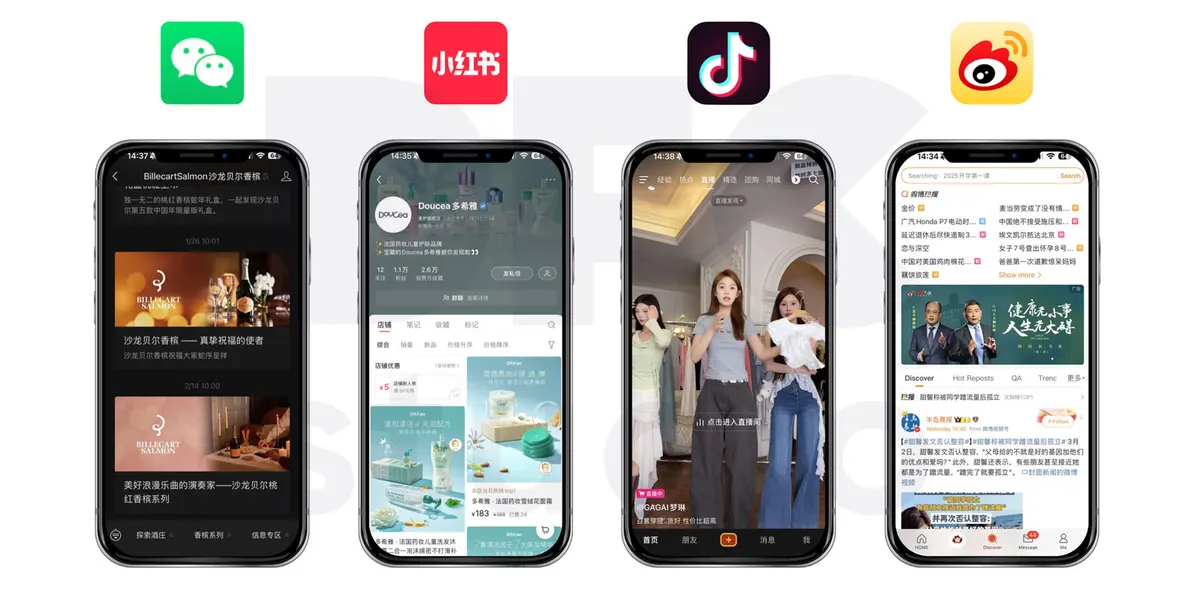
- WeChat: A true digital tool combining messaging, e-commerce and financial services.
- Xiaohongshu (RED): A social platform where Chinese internet users discover and buy products through user recommendations.
- Douyin (Chinese TikTok): A leader in short video, where promotional campaigns through live streaming have become essential.
- Weibo: A key microblogging network for digital communication and wide-reaching advertising campaigns.
Competition between platforms pushes brands to diversify their digital strategies to reach potential customers effectively.
2. The Power of Engagement: Influencers and Customer Relations
Influencer marketing in China is an essential lever for brands that want to win consumer trust and stand out in an ultra-competitive market. Young consumers, very active on Xiaohongshu and Douyin, attach great importance to recommendations from KOLs (Key Opinion Leaders) and KOCs (Key Opinion Consumers).
Platforms such as WeChat and Xiaohongshu let brands engage their audience with immersive content and direct interaction. Digital customer service, through a WeChat Service Account or Xiaohongshu DMs, also plays a key role in optimizing customer relations.
By integrating these strategies, brands can not only improve their brand image but also convert potential customers more effectively.
3. The Boom in Social Commerce and Promotional Festivals
The rise of social commerce in China is directly linked to the massive use of mobile devices and the merging of social media and e-commerce. Today, Chinese internet users discover, compare and buy products without leaving their favorite apps.

Promotional festivals in China, such as 11.11 (Singles' Day) organized by Alibaba, have become must-attend events. These festivals help brands increase their sales with highly targeted advertising campaigns and attractive offers.
Western companies that want to succeed in China must therefore build these key moments into their digital strategy.
4. The Impact of New Technologies on Digital Marketing
In China, the line between offline and online experience is increasingly blurred. Consumers expect total immersion, with online shopping coming as close as possible to the physical experience. This pushes platforms to innovate constantly and offer interactive, engaging features.
Chinese internet users are thus adopting new consumption habits, forcing Chinese companies and international brands to adjust their digital marketing strategy. Here are the key trends shaping this transformation:
- Live streaming or live commerce: Now an essential sales channel on Douyin, Taobao and Xiaohongshu, it lets brands interact live with consumers and generate instant sales, reproducing the in-store experience.
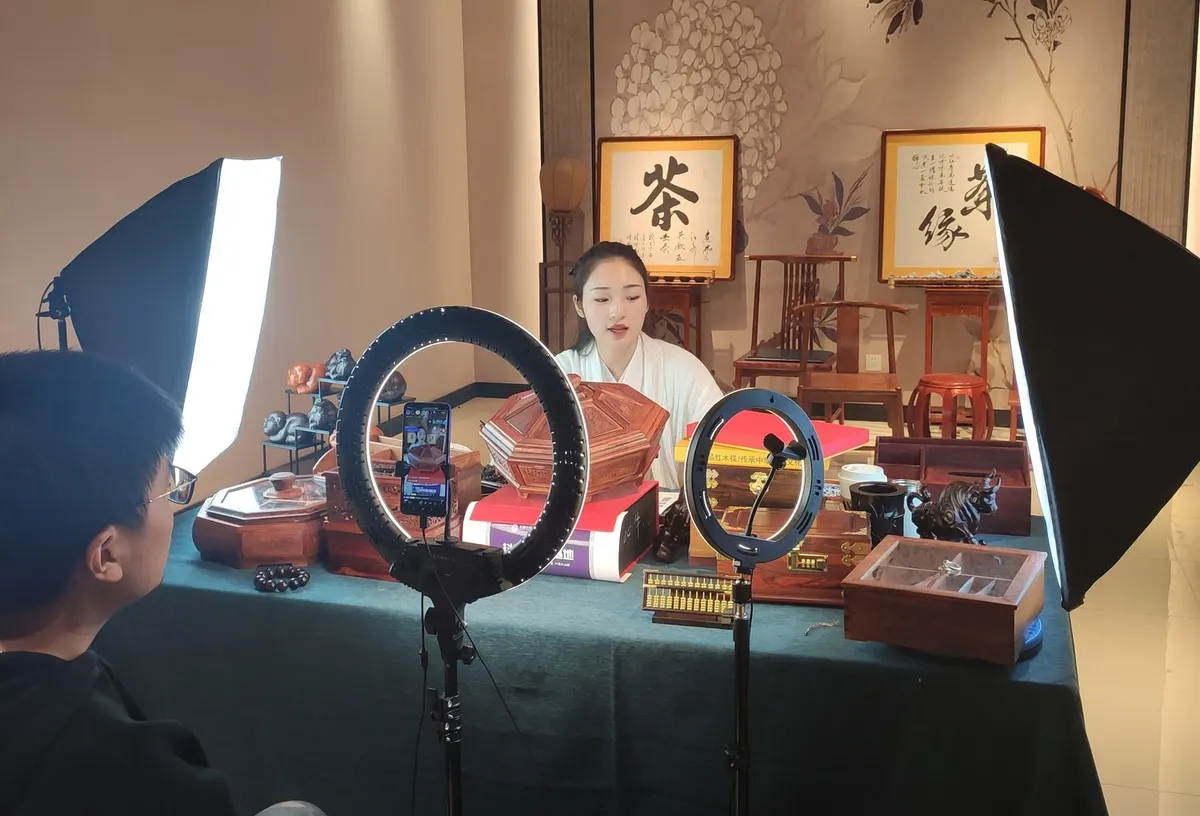
- Automating and optimizing customer relations: More and more companies are setting up interactive tools to smooth the user experience, notably through WeChat Service Accounts and automated reply systems that allow real-time interaction, almost day and night.
- Integrating e-commerce into the WeChat ecosystem: WeChat mini-programs give direct access to e-commerce stores from the app, making it easy to buy without going through an external site, and offering perfect continuity between content, engagement and conversion.
Faced with these changes, product designers and brands must innovate to offer a digital experience ever closer to in-store shopping, focusing on interaction, personalization and a smooth customer journey.
5. SEO and Advertising: Maximizing Your Visibility in China
Digital marketing in China does not rely only on search engines such as Baidu, but also on a broader approach to search. SEO is no longer limited to a conventional search engine: in China, every platform where users search must be optimized.
Social media have become true search engines. Chinese consumers no longer just use Baidu: they also search for content directly on Xiaohongshu, Douyin, WeChat, Zhihu and Bilibili, depending on their needs and consumption habits.
Optimizing Your Search Ranking in China: A Multi-Channel Approach
Multi-channel content work is essential to be visible on all these platforms. Good SEO does not only mean appearing at the top of Baidu's results, but also ranking well on the other channels where users search.
- Zhihu: This social network, a kind of "Chinese Quora", is particularly well indexed on Baidu and WeChat, offering additional visibility to brands that publish informative, credible content.
- Bilibili: A video platform very popular with young consumers, it is indexed on Baidu, which makes it a useful lever for content and awareness strategies.
- WeChat and Xiaohongshu: With their advanced search systems, these platforms let users find content directly without going through a traditional search engine.
Advertising and Traffic Acquisition in China
Alongside SEO, advertising campaigns on Baidu Ads, WeChat Ads and RED Note Ads help brands reach their potential customers effectively.
As each platform has its own algorithm and specific ad formats, an integrated approach combining organic and paid search is essential to maximize visibility and engagement.
By adopting an SEO strategy adapted to the specificities of the Chinese market, brands can not only optimize their presence on Baidu but also strengthen their visibility across all the digital ecosystems used by Chinese consumers.
6. The Future of Digital Marketing in China: What Awaits Brands
New trends in China show that digital will keep evolving rapidly. Communication services will become even more personalized thanks to advances in mobile technology and big data.
International brands that want to establish themselves in China will have to:
- Adapt to new, emerging platforms.
- Create highly personalized campaigns based on data analysis.
- Exploit the potential of social commerce and KOLs to strengthen their brand image.
Western companies that can anticipate these changes will have a lasting competitive advantage in this unique market.
Conclusion
Succeeding in digital marketing in China requires a thorough understanding of new trends, local platforms and Chinese consumer behavior.
Chinese and Western companies alike must adopt a flexible digital strategy, relying on influencers, social commerce and suitable advertising campaigns.
In a constantly evolving market, an agile, local approach is the key to captivating Chinese internet users and building a lasting relationship of trust.
At DFC Studio, we support international brands in their digital development in China, building tailor-made strategies adapted to the specificities of the market. With our local expertise and command of Chinese digital channels, we help our clients optimize their online presence, maximize their brand image and convert effectively.
Whether you want to develop a social media strategy, launch an advertising campaign or optimize your multi-channel SEO, our team supports you at every step to guarantee concrete, lasting results.
Contact us now to accelerate your growth in China!
OUR EXPERTISEDigital marketing and advertising agency in China
Thibault has been living in Beijing since 2014 and has quickly established himself as one of the leading international digital experts in China. With his extensive expertise, he assists large corporations, institutions, and high-end brands in their digital development by offering strategic solutions tailored to the Chinese market.