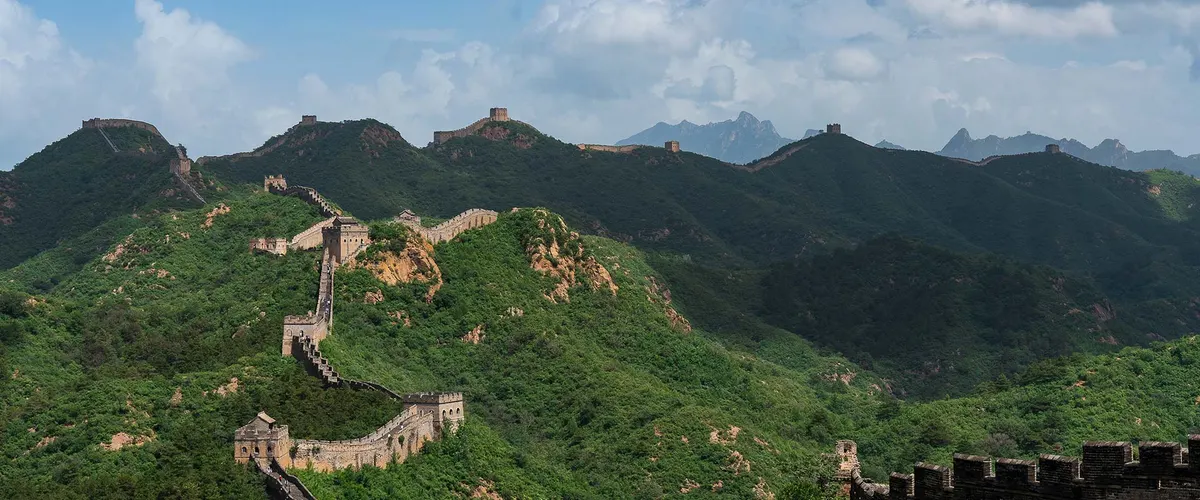
Stretching across mountains, deserts and plains, this colossal structure is as fascinating for its history as for its staggering dimensions.
Before diving into its historical secrets and breathtaking landscapes, let's start with the key figures that sum up the sheer scale of this monumental project. The questions everyone asks, such as its real length, how long it took to build, or whether it can be seen from space, are answered here.
Ready to discover the records of this stone giant? Here are the essential facts for understanding why the Great Wall remains one of the most extraordinary human constructions of all time.
Key Figures: All About the Great Wall
What Is the Total Length of the Great Wall?
- 21,196 km: This is the official length measured in 2012 (including walls, trenches and natural barriers).
- Only 8.2% is well preserved (mainly the Ming sections near Beijing).
- Myth: No, it is not "5,000 km" long: that figure only applied to the Qin sections.
Who Built the Great Wall and How?
- Dynasties involved: Qin, Han, Jin, Ming (plus warring states such as Northern Qi).
- Workforce: Soldiers, peasants, prisoners (up to 300,000 workers under Qin Shi Huang).
- Materials:
– Fired clay bricks (Ming)
– Compacted earth + sticky rice (Qin)
– Stones from the Yellow River
What Are Its Dimensions?
- Height: 6 to 14 m (depending on the section).
- Width: 4 to 5 m at the top (enough for 5 horsemen abreast).
- Estimated volume: 300 million m³ of materials (equivalent to 30 Pyramids of Giza!).
How Long Did Construction Take?
- 2,000 years: From the first walls under the Warring States (5th century BC) to the Ming (17th century).
- Key dynasty: The Ming (1368-1644) built 25% of the current route in 200 years.
Can the Wall Be Seen From Space?
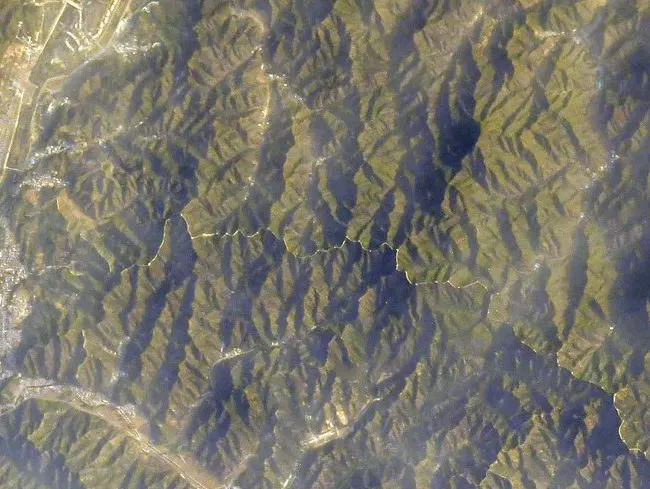
- Not from the Moon (a widespread myth), but yes from the International Space Station (ISS) at an altitude of 400 km, in optimal conditions.
How Many Watchtowers Are There?
- About 25,000 originally.
- Function: Transmitting signals (smoke by day, fire by night) over 500 km in 24 hours!
The Epic History of the Great Wall of China
The Great Wall we know today is the result of an architectural and strategic evolution spanning more than twenty centuries. Its history is intertwined with that of the Chinese dynasties, each of which contributed to this legendary structure.
[475-221 BC] Origins: The Warring States
During this troubled period, seven rival kingdoms built independent border walls. The Qi dynasty built sophisticated fortifications in the south, while northern states such as Yan, Zhao and Northern Wei raised barriers against the fearsome Xiongnu horsemen. These disparate constructions, although rudimentary, were the embryo of the future Great Wall.
[221-206 BC] Imperial Unification Under the Qin
The accession of Qin Shi Huang marked a radical turning point. The first emperor ordered not only the connection of existing walls, but also launched colossal construction projects to the west. Hundreds of thousands of workers (soldiers, peasants, prisoners) died in appalling conditions.
[206 BC-220 AD] Expansion to the West
Faced with the persistent Xiongnu threat, the Han extended the defensive system as far as the Hexi Corridor.
[1115-1234] Resistance Under the Jin
The Jin dynasty greatly strengthened the northern defenses against the Mongols, building innovative sections that foreshadowed the work of the Ming.
[1368-1644] The Golden Age of the Ming
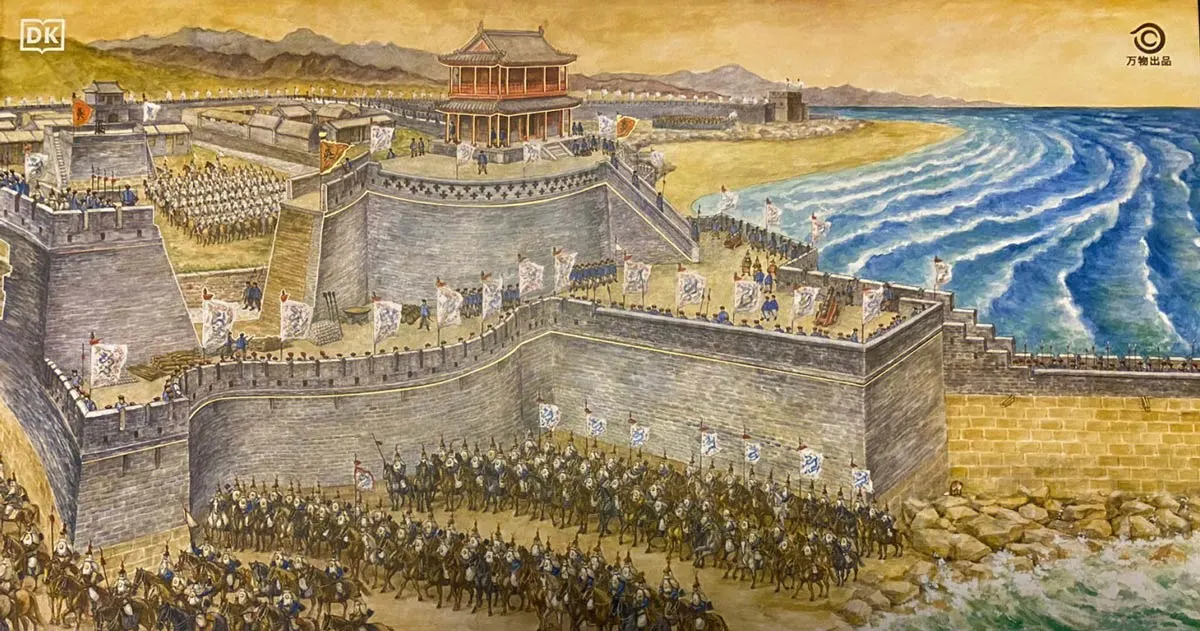
After the Mongol humiliation, the Ming undertook the largest reconstruction program. For 276 years, millions of craftsmen worked on colossal construction sites, building the iconic fired-brick sections.
[1644-1912] Decline Under the Qing
The Manchu conquest made this stone frontier obsolete. Sections once vital to the Northern Wei and other dynasties gradually fell into ruin.
[20th-21st Century] Contemporary Renaissance
Today, only 8.2% of the Ming structure survives in its original state, a testament to the extraordinary legacy of the dynasties from the Qi to the Ming.
The history of the Great Wall remains a giant palimpsest in which each dynasty engraved its destiny, from the first earth walls to the majestic fortifications.
The Geography of the Great Wall: A Journey From East to West
From the Yellow Sea to the Gobi Desert: An Exceptional Route
The Great Wall traces a winding line through the most varied landscapes of northern China. From wave-battered shores to the far reaches of the desert, its route masterfully follows the natural terrain for more than 20,000 kilometers. This constant adaptation to geographical constraints shows the genius of the Chinese builders.
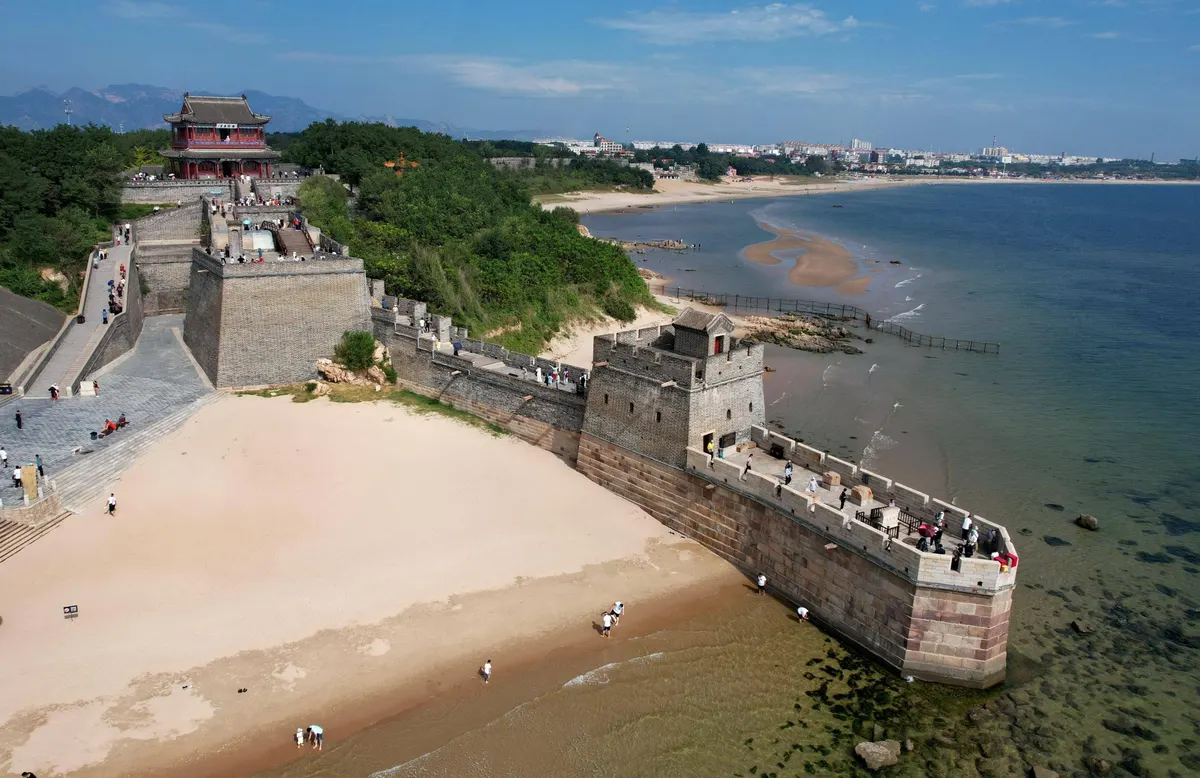
The Sea Gate of Shanhaiguan
At the eastern end, where the mountains meet the Bohai Sea, stands the strategic Shanhaiguan pass. The section nicknamed "Old Dragon's Head" plunges into the waves, as if the wall wanted to drink the salt water. Under the Ming, this checkpoint watched over both invasions from the sea and movements on land. Today, visitors can admire the sight of waves breaking against the old stones. Located northeast of Beijing, this section is next to the seaside resort of Qinhuangdao, one of the must-see beaches in China.
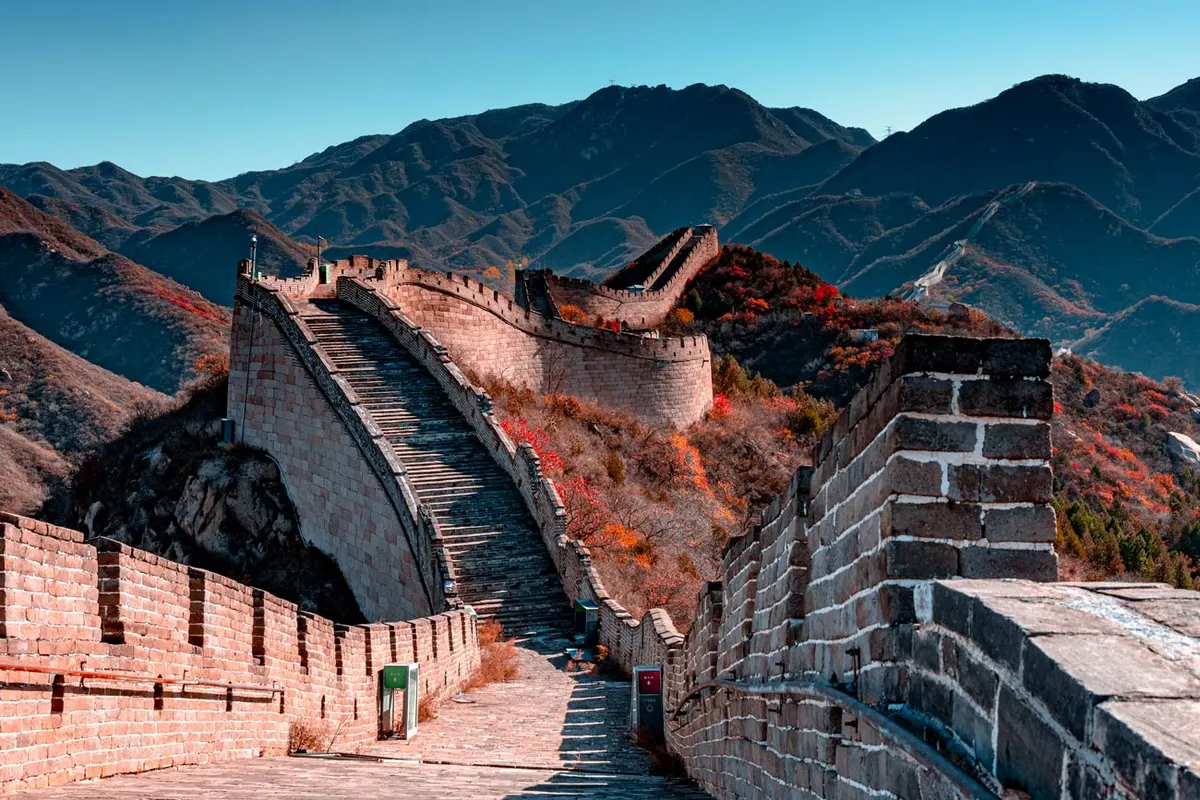
Through the Northern Mountains
Heading west, the wall climbs the rugged ridges of the mountains around Beijing. In these steep, forested landscapes, the builders followed the ridge lines with remarkable precision. The particularly well-preserved Mutianyu and Jinshanling sections offer spectacular views of this dramatic terrain, where the wall undulates like a stone dragon.
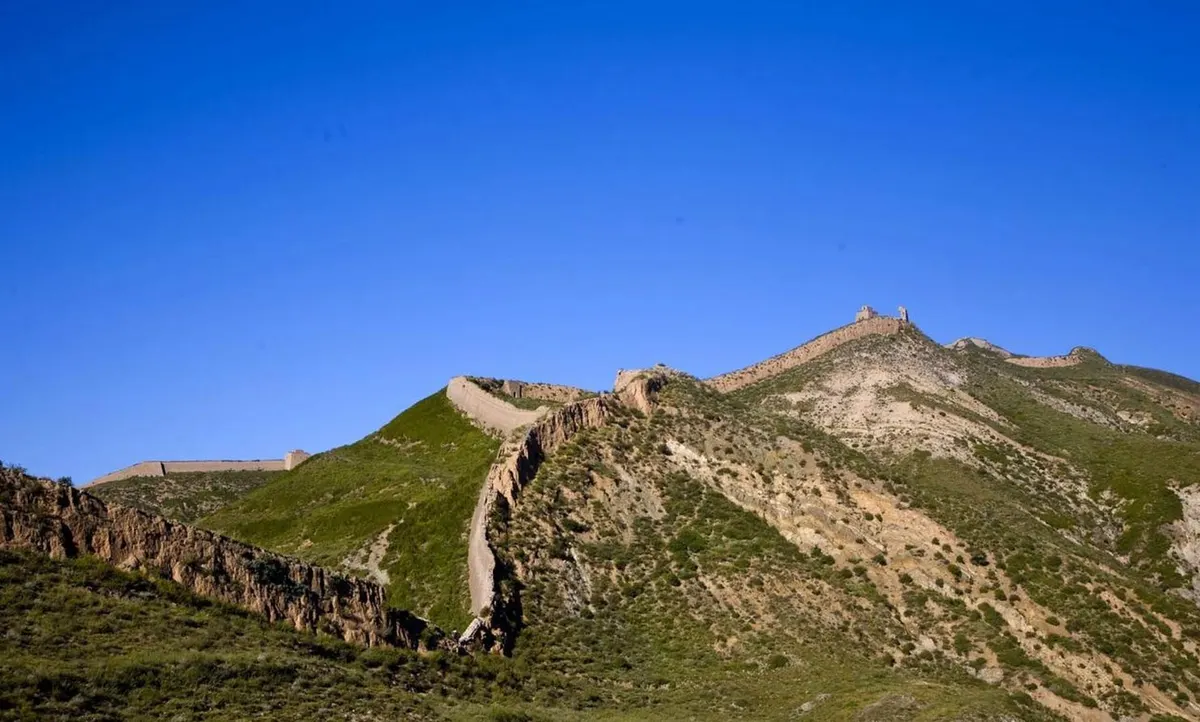
Crossing the Arid Plateaus
Further west, in Shanxi and Shaanxi provinces, the landscape changes radically. The wall crosses semi-desert plateaus where the wind has been sculpting the loess for millennia. Here, the raw earth sections are particularly vulnerable to erosion. Some stretches are now only ghostly silhouettes melting into the ochre landscape.
The Ultimate Desert Frontier
In Gansu and Ningxia provinces, the wall takes on an even more austere character. The forts of Jiayuguan and Yumenguan, true fortified oases, once marked the frontier between the Chinese world and the wild expanses of the northwest. Their massive architecture shows the strategic importance of these outposts lost in the immensity.
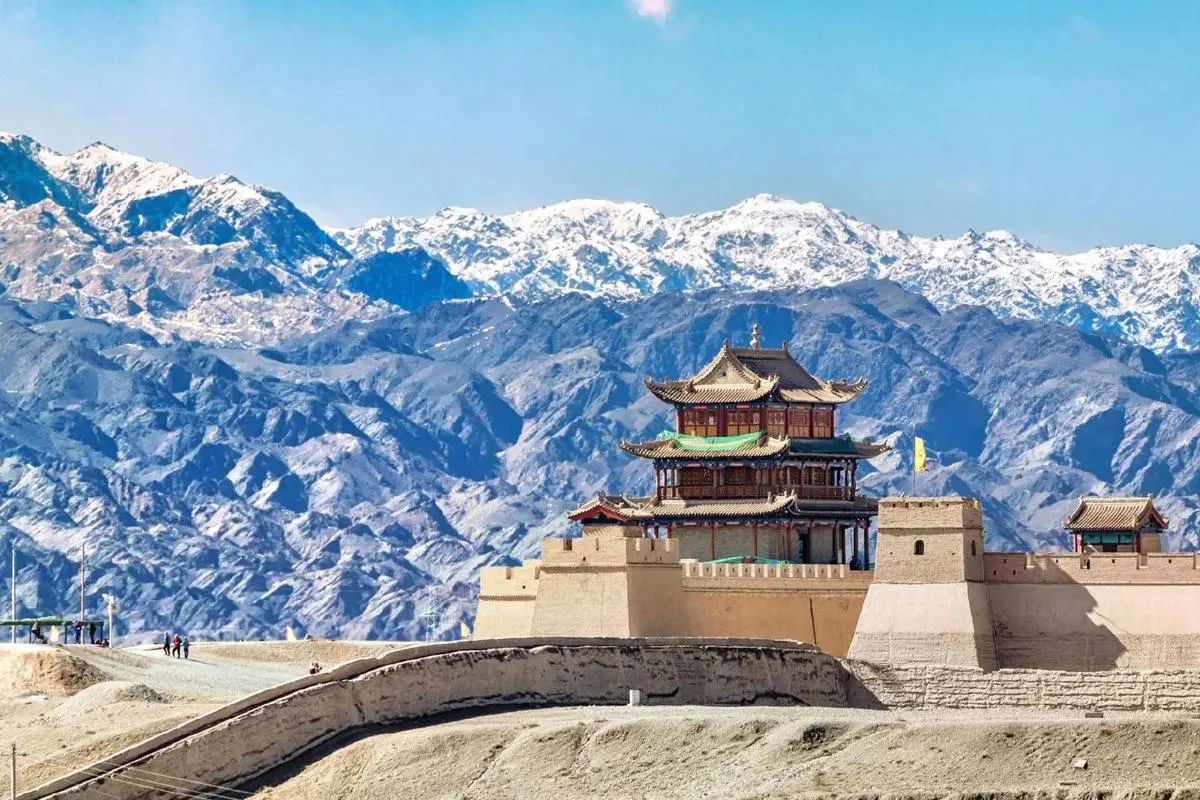
At the western end, on the edge of the Gobi Desert, the wall ends in a mineral landscape where the wind whips up whirlwinds of sand. Today, many western sections are gradually disappearing under the dunes, swallowed by the relentless advance of the desert.
This astonishing geographical diversity makes the Great Wall much more than a simple fortification. It is a true open-air museum of Chinese landscapes, a thousand-year dialogue between human work and the forces of nature. Each section, depending on its environment, tells a different story of adaptation and resilience.
Which Part of the Great Wall Should You Visit? 5 Must-See Sections
1. Mutianyu: The Most Majestic
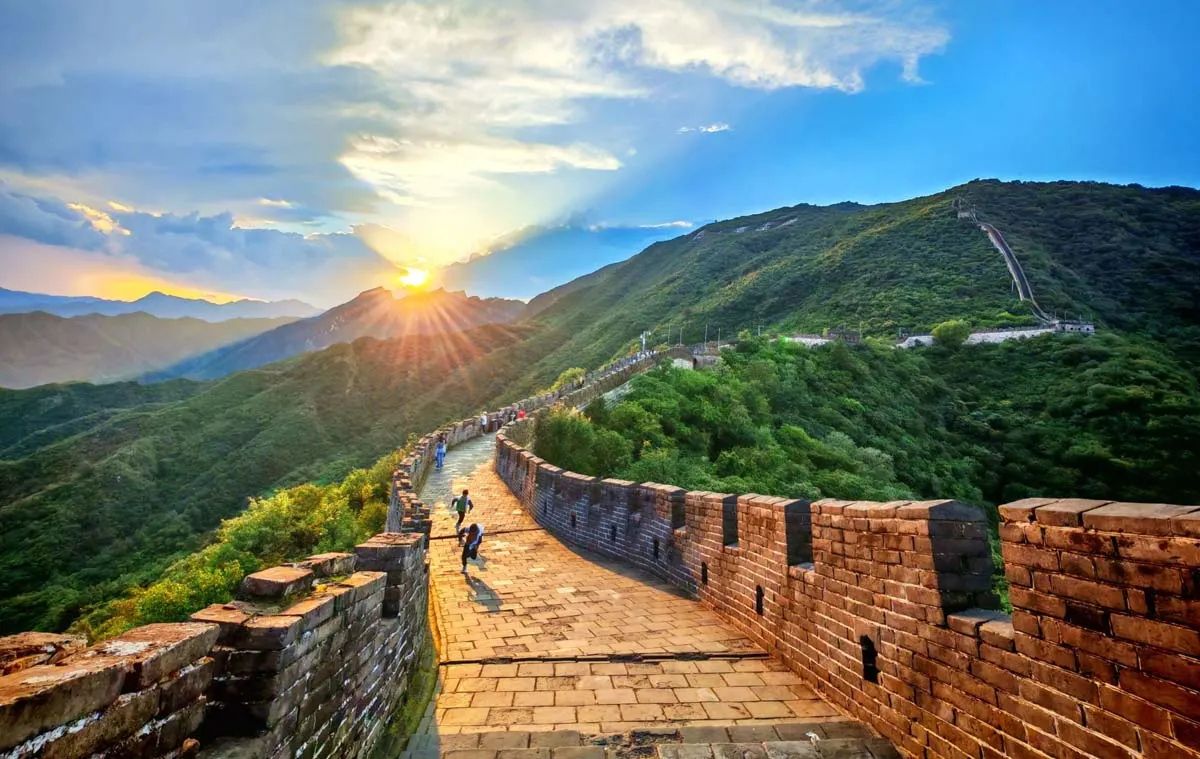
70 km north of Beijing, the Mutianyu section offers the perfect balance between authenticity and accessibility. Restored carefully but not excessively, it winds for 22 km through wooded ridges. Its highest point, at an altitude of 1,000 meters, reveals a breathtaking panorama of the surrounding mountains. A unique feature: you can come down on a toboggan along a winding 1,580-meter track after your visit. The best period is from April to October, with spectacular autumn colors in October.
2. Jiankou: The Wild Adventure
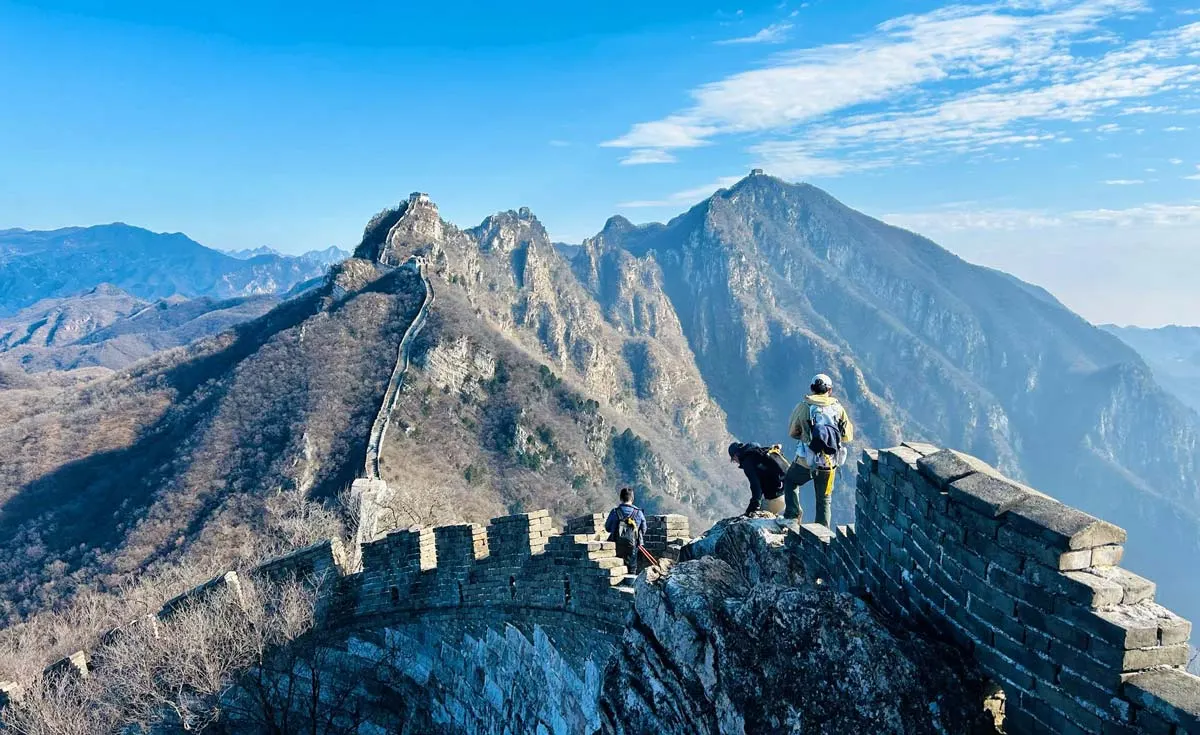
For experienced hikers, Jiankou is the Holy Grail. This completely unrestored section, located 80 km from Beijing, is known for its steep slopes and its "sleeping dragon" appearance as it undulates along the mountain ridges. The so-called "Arrow" stretch, with its 70-degree angle, is particularly impressive. Warning: some stretches require real climbing skills. Bring hiking boots and an experienced guide for this off-the-beaten-track experience.
3. Jinshanling: The Ming Masterpiece
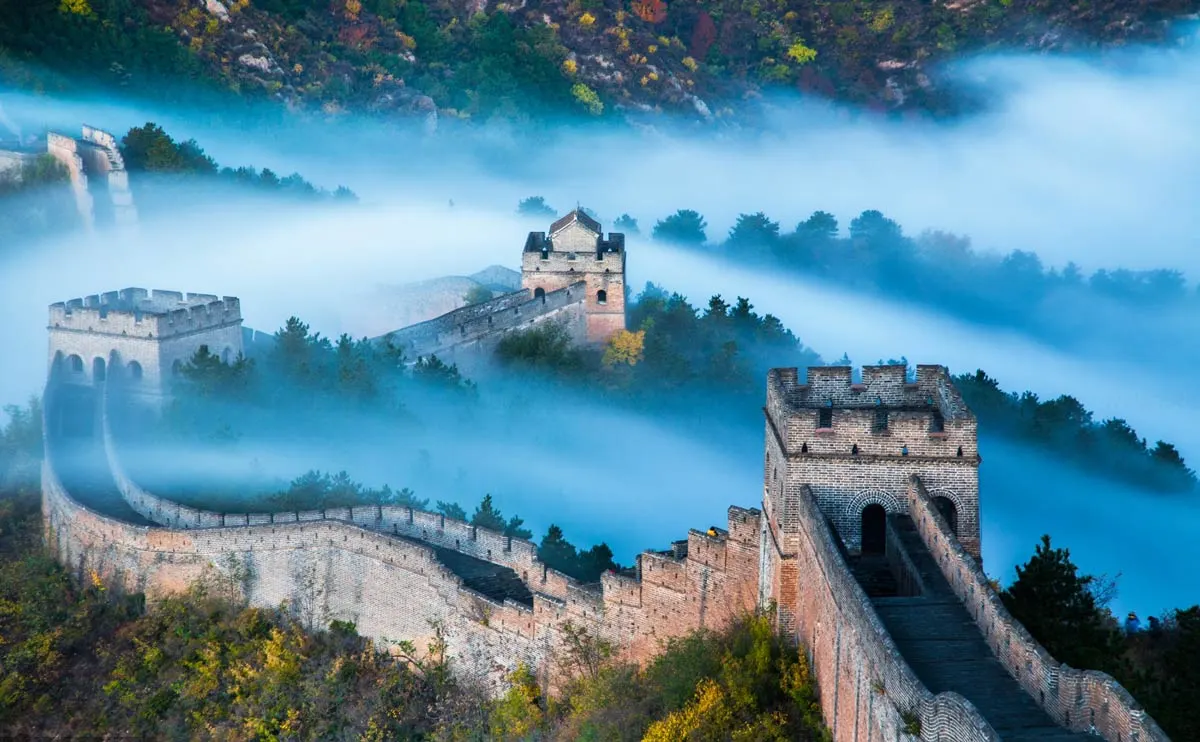
140 km from Beijing, Jinshanling shows Ming architecture in all its splendor. Along 10.5 km, you will discover 67 perfectly preserved watchtowers, each with its own unique style. This section is ideal for those who want to admire ancient military engineering while enjoying breathtaking mountain scenery. Sunset over the crenellated ramparts is a magical moment. The hike to Simatai (6 km) is considered one of the most beautiful in the country.
4. Huanghuacheng: The Lakeside Wall
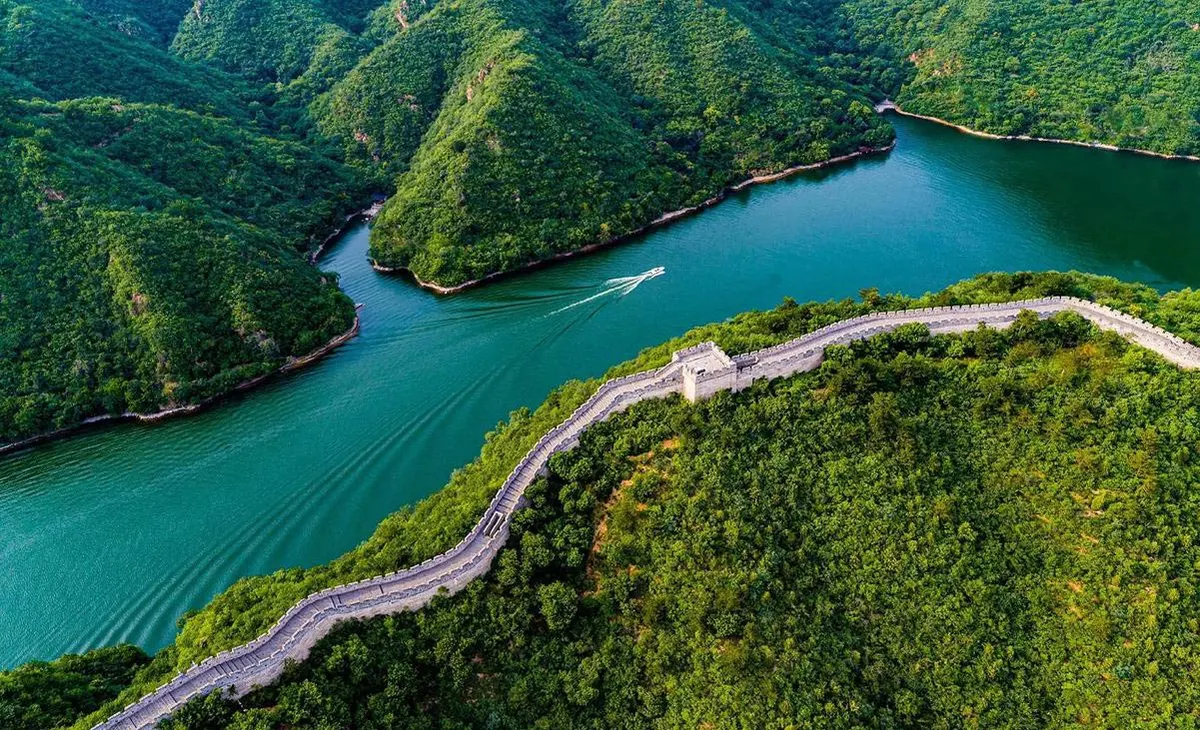
One of a kind, Huanghuacheng ("the wall of yellow flowers") plunges straight into Haoming Lake. Located 80 km from Beijing, this 12.4 km section combines history and spectacular water landscapes. In spring, the surrounding hills are covered with yellow wildflowers, which give the site its name. The submerged section, visible in clear weather, creates a mysterious, poetic atmosphere. Perfect for a summer visit, with the possibility of swimming near the remains.
5. Badaling: The Accessible One
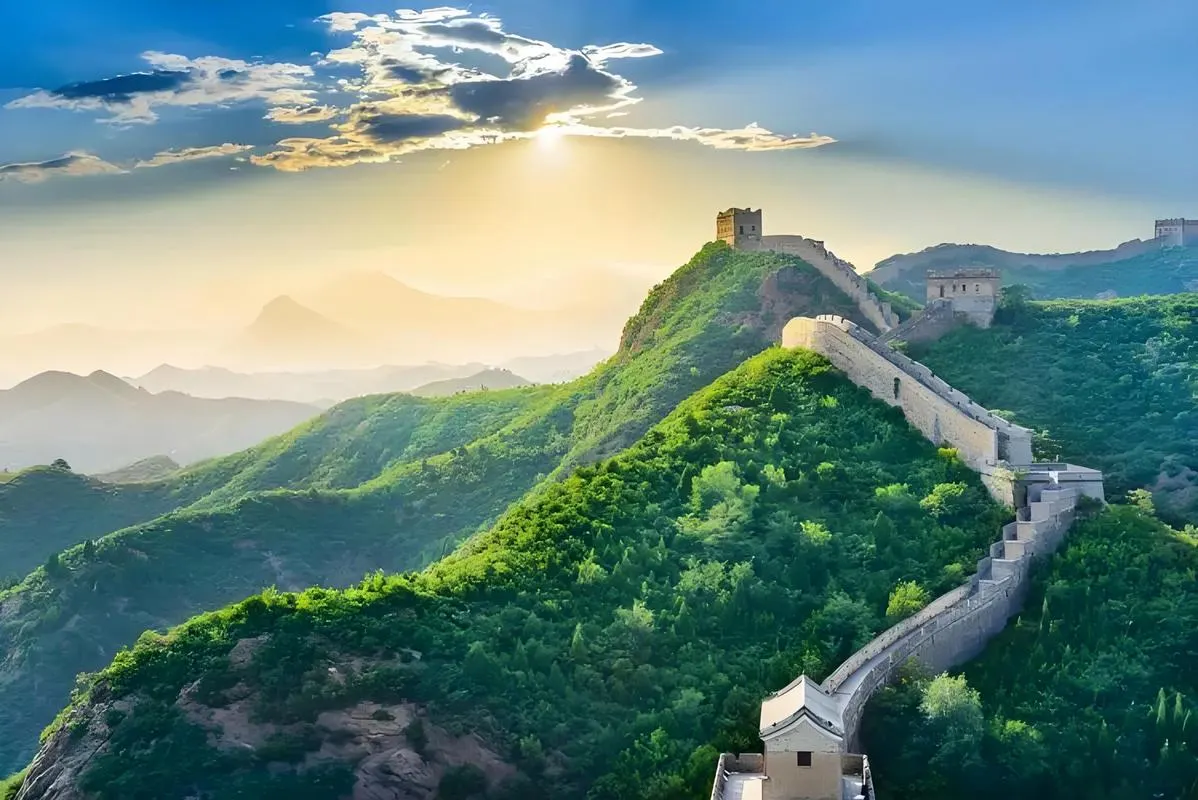
Although very busy, Badaling deserves a visit for its historical importance. Only 70 km from Beijing, it was the first section opened to the public, in 1957. Its massive ramparts and stunning views have made it the choice of world leaders (Nixon, Obama…). To avoid the crowds, visit early in the morning or opt for the less restored northern part. The on-site museum offers excellent information on the wall's overall history.
Expert tip: For a unique experience, combine several sections. For example, start with Badaling for the historical context, then explore Mutianyu or Huanghuacheng for more natural scenery. History buffs will particularly appreciate Jinshanling, while adventurers will turn to Jiankou.
When to Visit the Great Wall? A Guide by Season
The Golden Seasons: Spring and Autumn
April-May and September-October are the ideal periods. Mild temperatures (15-25°C) and dry air offer perfect conditions for hiking. In October, the sight of the surrounding forests turning red and gold is simply magical. Choose weeks outside Chinese holidays to avoid the crowds.
Summer: Avoid or Adapt
From June to August, the stifling heat (often >30°C) and torrential rain make the climb arduous. If it is your only option, go for:
- Wooded sections such as Mutianyu
- Very early morning visits (opening at 6:30 am)
- Weekdays, to escape the summer crowds
Winter: For the Brave and for Photographers
From December to February, the biting cold (often -10°C) and snow turn the wall into a fairytale landscape… for those who dare! Sections such as Badaling remain accessible, with minimal crowds. Bring very warm clothes and shoes with crampons. Clear days after a snowfall make for spectacular photos.
Absolutely Avoid
- Chinese New Year week (dates vary in January/February)
- May 1 and October 1 (extremely crowded national holidays)
- Days of heavy smog (check the AQI before leaving)
Our tip: Check the weather forecast the day before. A clear sky after a day of rain offers exceptional visibility and vibrant colors on the old stones.
In Summary:
- Best period: mid-September to mid-November
- Acceptable alternative: mid-April to mid-May
- Avoid if possible: July-August (heat + rain + crowds)
- Unique but difficult experience: January-February (snow)
Conclusion
The Great Wall of China, the largest human construction ever built, remains much more than a simple barrier of stone. It embodies the ingenuity, perseverance and thousand-year history of a civilization. Today, its most famous sections are among the most visited tourist attractions in the world, while its wild stretches continue to fascinate explorers.
Whether you see it from the ramparts of Mutianyu, the watchtowers of Jinshanling or the steep ridges of Jiankou, every stone tells an epic. Between preserved remains and breathtaking landscapes, the Wall offers a unique experience combining adventure, history and wonder.
OUR EXPERTISEDigital marketing and advertising agency in China
Thibault has been living in Beijing since 2014 and has quickly established himself as one of the leading international digital experts in China. With his extensive expertise, he assists large corporations, institutions, and high-end brands in their digital development by offering strategic solutions tailored to the Chinese market.